





UNI-T UTS3084A Signal Analyzer | 8.4 GHz Real-Time Spectrum + VNA + Tracking Generator
Overview
The UNI-T UTS3084A is a 8.4 GHz real-time signal analyzer with built-in vector network analyzer (VNA) and tracking generator — a different class of instrument from a swept-spectrum analyzer, sized for advanced RF design, EMC engineering, and modulated-carrier characterization. Frequency coverage runs 9 kHz to 8.4 GHz with 1 Hz resolution; minimum resolution bandwidth is 1 Hz; maximum resolution bandwidth is 10 MHz; typical displayed average noise level reaches -165 dBm/Hz (200 MHz to 1.5 GHz, preamp on); and phase noise runs -100 dBc/Hz typical at 10 kHz offset. The 10.1-inch 1280 × 800 capacitive multi-touch display surfaces real-time, swept, VNA, and (with optional licenses) demodulation modes without burying them behind soft-key paths.
The UTS3000A is built around three architectural pillars that swept-spectrum analyzers do not have: real-time spectrum analysis, vector network analysis with S11/S21, and digital signal demodulation. Real-time spectrum is standard at 10 MHz bandwidth (extendable to 40 MHz with the optional UTS3000A-B40 license), with 100% probability-of-intercept at 6.68 µs minimum signal duration. The VNA covers 100 kHz to 6 GHz with 80 dB S21 dynamic range and >40 dB S11 directivity after calibration — the reflection bridge is internal. Digital demodulation (optional UTS3000A-VSA) covers ASK, FSK, PSK, QAM, MSK, and DPSK with EVM measurement. The UTS3084A is the family flagship at 8.4 GHz, extending spectrum measurement reach into X-band radar work, C-band satellite uplinks, and the upper microwave region while preserving the full real-time + VNA + demodulation capability stack to 6 GHz.
Key Features
- Frequency Coverage: 9 kHz to 8.4 GHz signal analysis
- Real-Time Spectrum (Standard): 10 MHz default; 40 MHz optional with UTS3000A-B40
- Built-In VNA (Standard): S11 + S21, Smith chart, polar coordinates (100 kHz to 6 GHz)
- Tracking Generator (Standard): 100 kHz to 6 GHz, output -40 to 0 dBm
- Sensitivity: DANL -165 dBm/Hz typical (200 MHz to 1.5 GHz, preamp on)
- Phase Noise: -100 dBc/Hz typical at 10 kHz offset
- Resolution Bandwidth: 1 Hz to 10 MHz in 1-3-10 steps
- Sweep Resolution: 40,001 sweep points; minimum RBW 1 Hz
- Multi-Trace Display: 12 real-time / 6 swept simultaneous traces
- Frequency Mask Trigger: FMT for transient and episodic signal capture
- Display: 10.1-inch 1280 × 800 capacitive multi-touch HD
- Connectivity: USB-Host, USB-Device, LAN (VXI-11), HDMI, 10 MHz reference in/out
- Programmability: SCPI over USB-TMC, Socket, VXI-11; WebServer; LabVIEW; NI-VISA
- Optional Packages: B40, AMK, EMI, AMA, VSA (digital demod), I/Q Analyzer
UNI-T UTS3084A Detailed Features
Frequency Coverage (9 kHz to 8.4 GHz)
The UTS3084A covers 9 kHz to 8.4 GHz with 1 Hz frequency resolution — the family flagship at the top of the Performance Series frequency reach. The range adds X-band radar work below 8.4 GHz, C-band satellite uplinks, microwave power-amplifier characterization in the GaN device space, and the full sub-X-band frequency space on a single instrument. Tracking generator and VNA modes cover 100 kHz to 6 GHz; spectrum measurement extends to 8.4 GHz across the entire Performance Series capability stack — see the FAQ for stimulus-response measurement above 6 GHz.
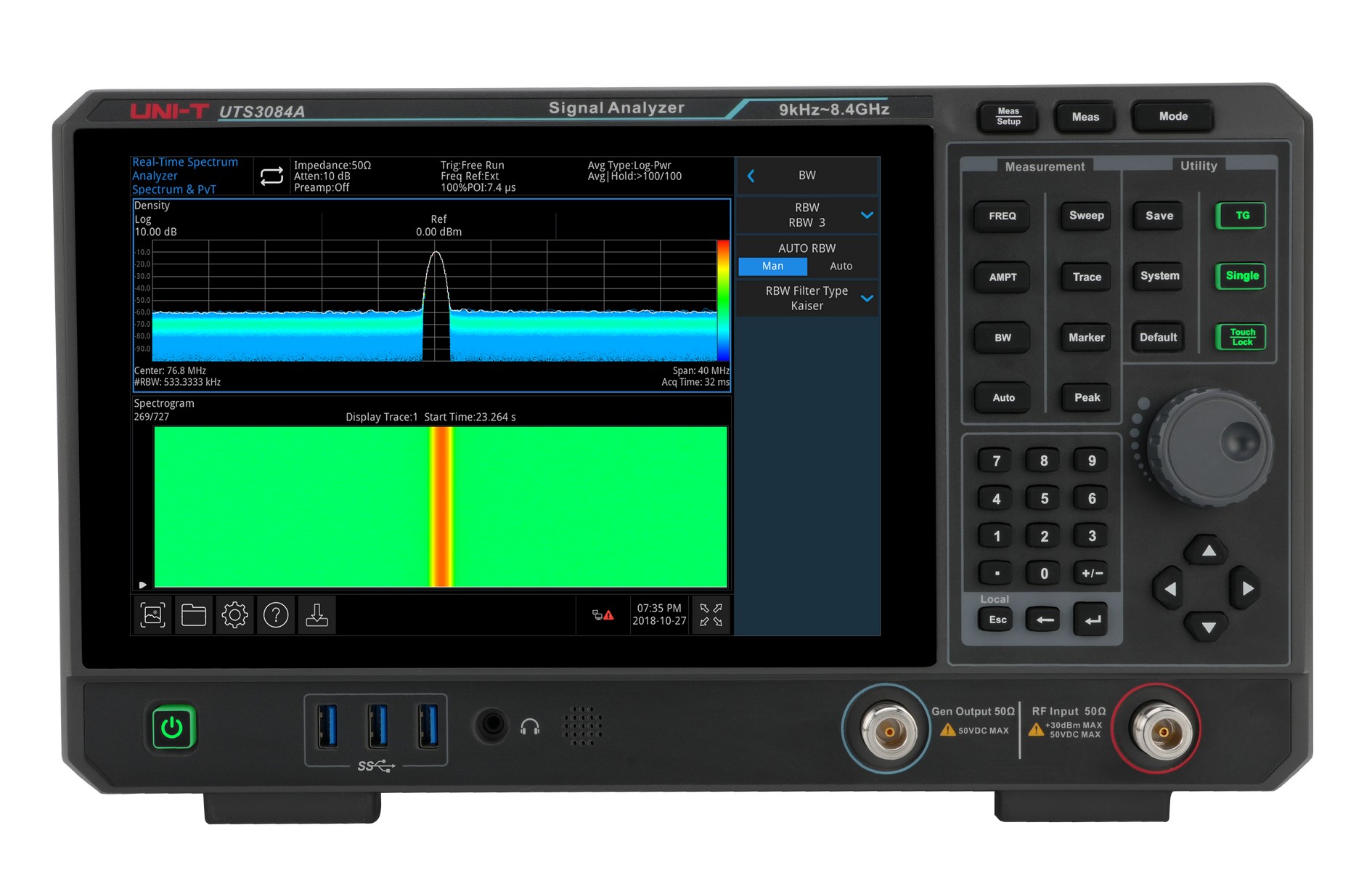 UTS3084A signal analyzer with 9 kHz to 8.4 GHz spectrum coverage.
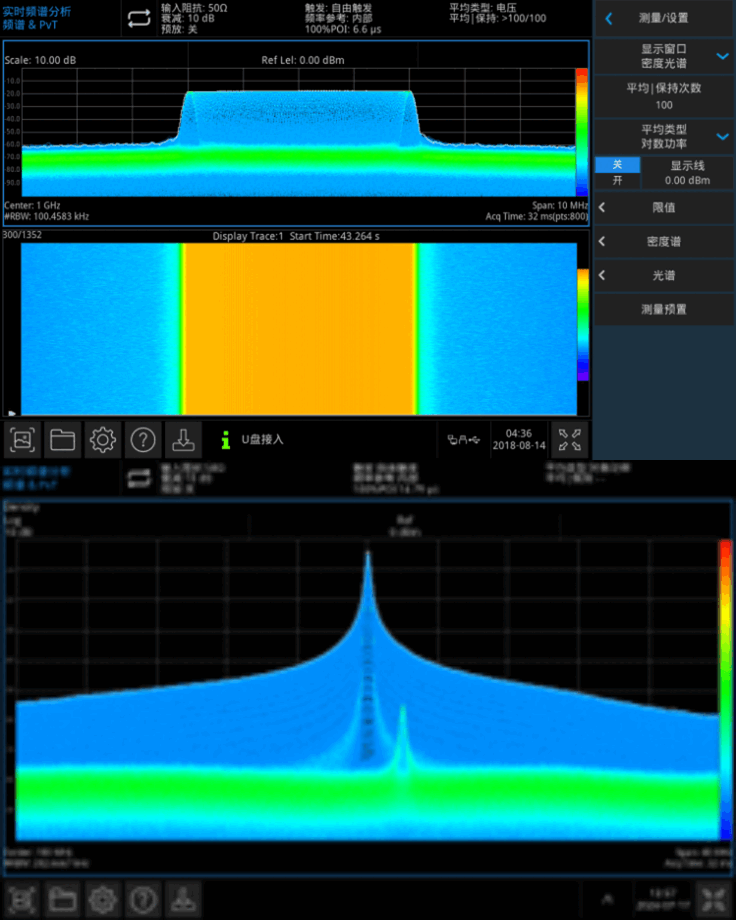 Real-time spectrum analysis with density spectrogram — standard, not swept.
Real-Time Spectrum Analysis (Standard)
Real-time spectrum analysis is included as standard, not as an option or upsell. Default real-time bandwidth is 10 MHz; the optional UTS3000A-B40 license extends this to 40 MHz. The signature display mode is the density spectrogram — consecutive FFT frames overlaid with probability-density coloration, surfacing low-amplitude signals hidden under stronger ones and revealing time-frequency structure that swept measurement collapses into a single trace. Maximum sampling rate 51.2 MSa/s; FFT rate 146,253 frames/second nominal; 12 simultaneous traces (vs. 6 swept). Eight display modes cover Normal, Density, Spectrogram, PvT, PvT Spectrum, PvT Spectrogram, Powergram, Powergram Spectrogram. The 100% probability-of-intercept minimum signal duration is 6.68 µs at 40 MHz span (default Kaiser window) — a guaranteed-capture spec swept analyzers fundamentally cannot match.
Built-In VNA: S11 + S21 (100 kHz to 6 GHz, Standard)
Vector network analysis is included as standard, not as a separate instrument or option. S11 reflection and S21 transmission cover 100 kHz to 6 GHz with 80 dB S21 dynamic range and >40 dB S11 directivity after calibration. The 6 GHz VNA ceiling is below the 8.4 GHz spectrum range — spectrum measurement extends to 8.4 GHz; VNA stimulus-response is supported 100 kHz to 6 GHz, covering the full 5G NR n77/n78/n79 band set, Wi-Fi 6E, and most cellular and consumer-radio component characterization. Display formats include logarithmic and linear amplitude, Smith chart, polar coordinate. Mechanical calibration: Open, Short, Load, Through, Custom — supported by the UT-3009F/M cal kit (DC to 9 GHz). The reflection bridge is internal.
 Built-in VNA: S11 reflection and S21 transmission, 100 kHz–6 GHz, with Smith chart and polar coordinates.
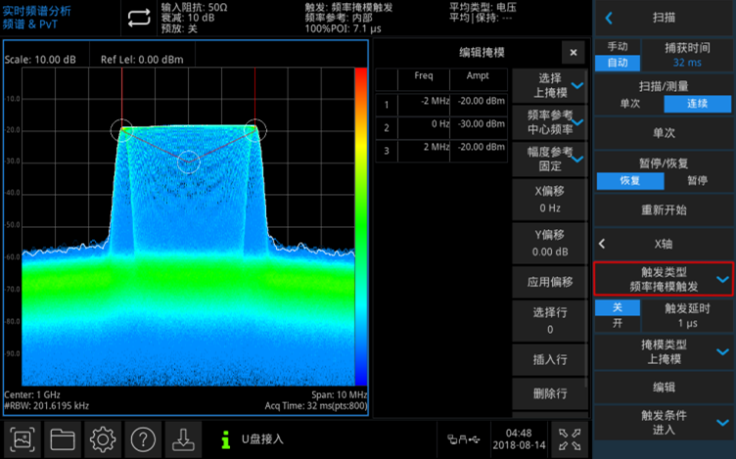 Frequency Mask Template trigger (FMT) for capturing episodic and transient signals.
Frequency Mask Template Trigger (FMT)
The Frequency Mask Template (FMT) trigger captures episodic and transient signals that exceed a user-defined spectral mask. Mask types: Upper, Lower, Both. Trigger criteria: Enter, Leave, Inside, Outside, Enter-Leave, Leave-Enter — supporting both threshold-crossing and dwell-time qualification. Combined with the real-time spectrum mode and 6.68 µs 100% POI minimum signal duration, FMT captures intermittent emissions, transient interference, and frequency-hopping transitions that fall between sweeps on a swept-spectrum analyzer. For radar pulse analysis, EMI event capture, and protocol-state spectral characterization, FMT is the trigger architecture that turns rare events into reliable measurements.
Digital Signal Demodulation (UTS3000A-VSA Option)
The optional UTS3000A-VSA Vector Signal Analyzer license adds digital demodulation across the modulation-scheme set used in modern radio: ASK (2/4/8/16), FSK (2/4/8/16), PSK (BPSK, QPSK, OQPSK, 8PSK), DPSK, QAM (16/32/64/128/256), and MSK. Symbol error statistics include EVM (rms and peak), magnitude error, phase error, IQ offset, carrier offset, SNR, quadrature error, and gain imbalance. Display formats: constellation diagrams, IQ time-domain plots, eye diagrams (I and Q), and error-vector time/frequency-domain views. Measurement filters: Raised Cosine, RRC, Gaussian, EDGE, CDMA, rectangular; symbol length 10 to 4,096; over-sampling rates 4 through 20. For modulated-carrier characterization where the question is signal quality on a bench-grade radio design, the VSA option replaces a separate vector signal analyzer instrument.
 Digital demodulation analysis (UTS3000A-VSA option): ASK, FSK, PSK, QAM, MSK, DPSK with EVM measurement.
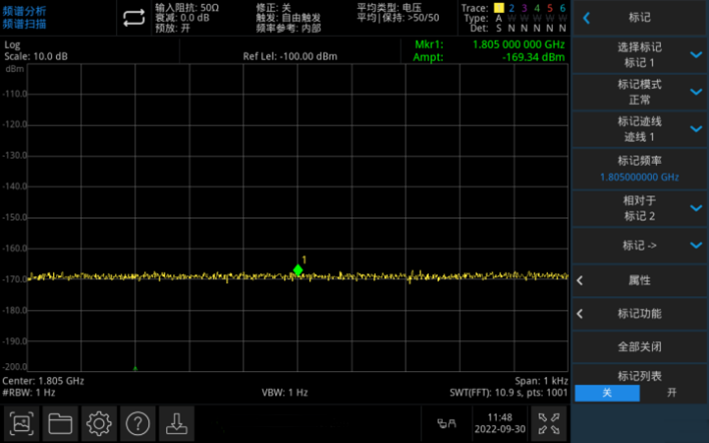 Typical DANL of -165 dBm/Hz (200 MHz to 1.5 GHz, preamp on) for weak-signal detection.
Sensitivity for Weak-Signal Detection (DANL -165 dBm/Hz typ.)
Displayed average noise level (DANL) reaches -165 dBm/Hz typical with the preamplifier engaged in the 200 MHz to 1.5 GHz band, and -166 dBm/Hz typical at 10 MHz to 200 MHz — the deepest sensitivity in the Performance Series. Across band, typical preamp-on DANL tracks from -153 dBm/Hz at 1–10 MHz to -158 dBm/Hz at the 7.5–8.4 GHz upper edge. With 0 dB attenuation, 1 Hz RBW, sample or average detection, and average >50, the noise floor supports detection of the low-amplitude phenomena that distinguish a quiet design from a marginal one — weak spurious emissions on power amplifiers, low-microwave harmonic content from wide-bandgap power stages, and modulated-carrier signal-integrity work.
EMI Pre-Compliance Testing (UTS3000A-EMI Option)
The optional UTS3000A-EMI package adds CISPR-specification resolution bandwidths (200 Hz, 9 kHz, 120 kHz, 1 MHz at −6 dB), quasi-peak and EMI-average detectors, and built-in limit masks for the major regulatory standards (AS-NZS, BellCore, DEF-STAN, DO-160, EN, FCC, GB9254, MIL-461, VCCI; plus custom limits). Scan workflow supports Scan-Search-Measure with signal-table reporting. Combined with the optional UTS-EMI01 near-field probe kit (four probes covering 30 MHz to 3 GHz), the analyzer supports radiated-emission pre-compliance measurement on the engineering bench — useful for catching mitigation needs before the compliance lab visit.
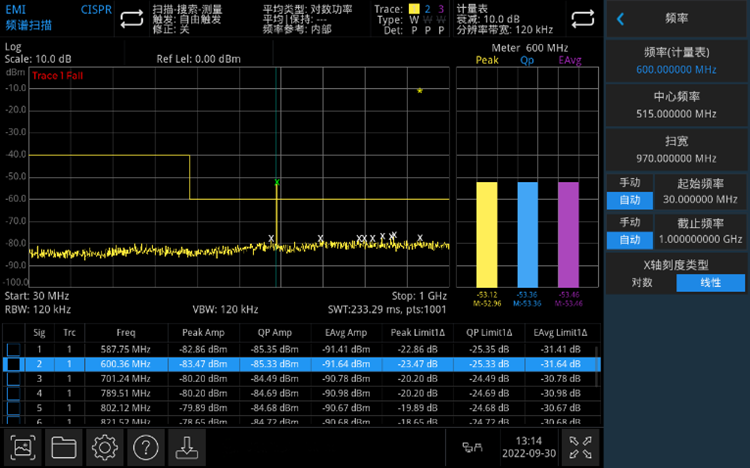 EMI pre-compliance with CISPR-spec RBWs and quasi-peak / EMI-average detectors (UTS3000A-EMI option).
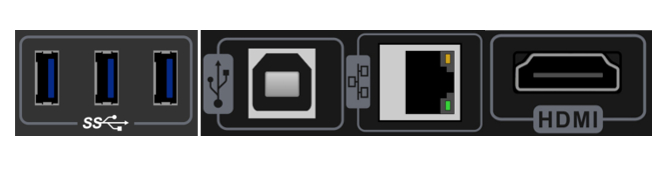 Front-panel: RF input (N-female), TG output (N-female). Rear: HDMI, USB-A, USB-B, LAN, 10 MHz reference, external trigger.
Comprehensive Interface Set
Front-panel interfaces include the RF input (50 Ω, N-type female) and the tracking-generator source output (50 Ω, N-type female). The 10.1-inch capacitive multi-touch display is also front-panel. Rear-panel interfaces support automated test integration: HDMI 1.4 video output for an external monitor; USB-Host (USB-A) for thumb-drive screenshot/data export and firmware update; USB-Device (USB-B) for direct PC connection over SCPI; LAN (VXI-11, 10/100/1000 Base, RJ-45) for network-based remote control; 10 MHz reference input/output (BNC, 50 Ω) for synchronization with other instruments; external trigger input (TTL, BNC); and audio output (3.5 mm). SCPI is supported over both USB and LAN.
SCPI, WebServer, and Multi-Platform Remote Control
Remote control supports SCPI over USB-TMC, Socket, and VXI-11; web-browser access through the built-in WebServer (PCs and mobile phones); LabVIEW and NI-VISA driver compatibility; and the UNI-T Device Manager software (V2.5.0 and higher) for instrument management over LAN or USB flash drive. The WebServer enables remote viewing, trace-data export, and SCPI control without installing a driver — useful for distributed test setups and for remote bench monitoring during long-duration EMC sweeps. The 10.1-inch capacitive multi-touch HD display (1280 × 800 native, RGB vertical pixel layout) provides the local user interface with drag-to-pan, pinch-to-zoom, and tap-to-place-marker gesture support.
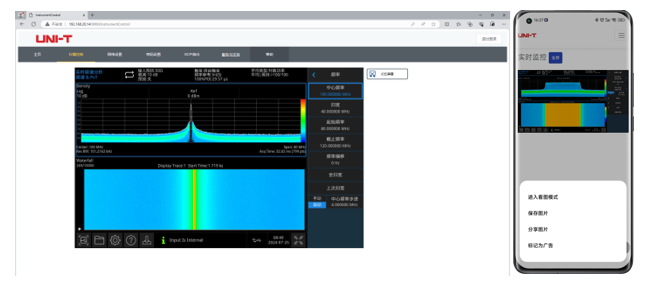 SCPI over USB-TMC, Socket, VXI-11; WebServer browser-based remote control; LabVIEW/NI-VISA support.
Applications
Advanced RF Design and 5G NR Characterization
For X-band radar work below 8.4 GHz, C-band satellite uplinks, microwave power-amplifier characterization in the GaN device space, and 5G NR mid-band measurement with full headroom for harmonic and spurious analysis, the UTS3084A is the family flagship at 8.4 GHz. The real-time + VNA + tracking-generator capability set carries through the full sub-6 GHz range; spectrum measurement extends to 8.4 GHz across the entire Performance Series capability stack.
EMC Pre-Compliance and Power-Electronics EMI
For wide-bandgap power-electronics microwave characterization where the question is GaN-device harmonic content well into the low-microwave region, EMC pre-compliance with extended frequency reach, and the full radiated-emissions range above the CISPR cap, the UTS3084A pairs 8.4 GHz spectrum reach with real-time mode for transient capture and the built-in 6 GHz VNA for EMI-filter characterization.
VNA Component Characterization and Network Analysis
For component characterization across the cellular, Wi-Fi, and sub-6 GHz consumer-radio range — with spectrum measurement reach extending to 8.4 GHz for harmonic and spurious work — the built-in VNA covers 100 kHz to 6 GHz with S11/S21, Smith chart, and polar-coordinate visualization. The UT-3009F/M calibration kit (DC to 9 GHz) supports the full VNA range. Spectrum measurement supported to 8.4 GHz; stimulus-response measurements above 6 GHz require an external generator (see FAQ).
Accessories & In the Box
Standard Accessories
- Power cord × 1
- UT-D14 USB cable × 1
- UTS3084A signal analyzer (instrument)
Recommended Optional Accessories
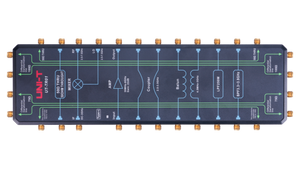
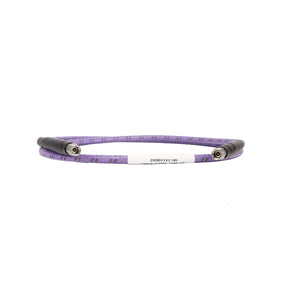
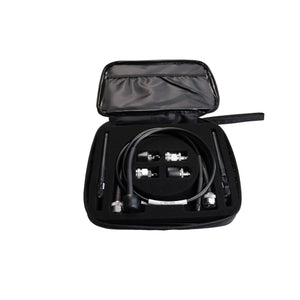
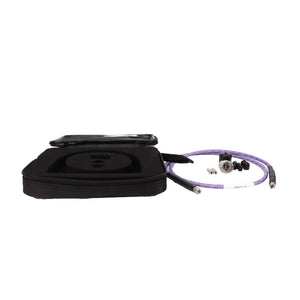
- UT-3009F/M VNA Calibration Kit — recommended pairing for VNA mode (DC to 9 GHz; supports Open/Short/Load/Through mechanical calibration).
- UTS3000A-B40 — extends real-time bandwidth from 10 MHz to 40 MHz (license-key unlock).
- UTS3000A-AMK Advanced Measurement Kit; UTS3000A-EMI EMI Pre-Compliance; UTS3000A-AMA Analog Demodulation; UTS3000A-VSA Vector Signal Analyzer (digital demod); UTS3000A-I/Q I/Q Analyzer — license-key software unlocks (see FAQ for capability summary).
- UTS-EMI01 Near-Field Probe Kit — four probes covering 30 MHz to 3 GHz for radiated-emission scouting.
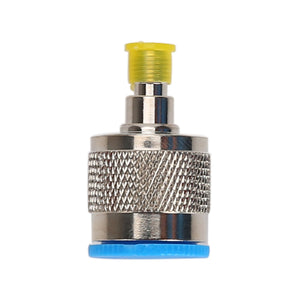
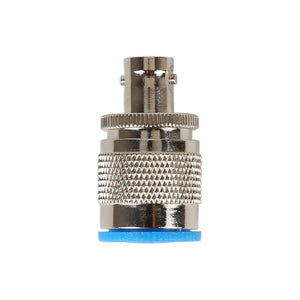
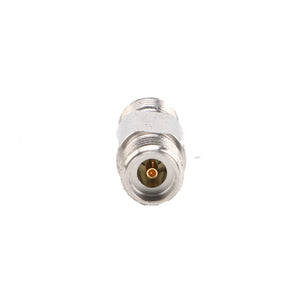
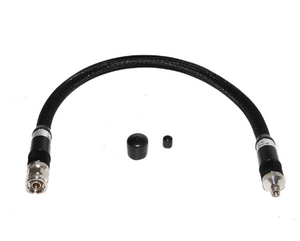
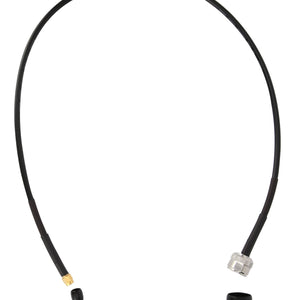
- UT-CK01 Cable and Adapter Accessory Kit — SMA-N adapters and cables for general RF bench work.
- UTS-T01 / UTS-T02 Antenna Pairs — Wi-Fi/Bluetooth (2400–2500 MHz) and cellular-band (824–960 / 1710–1990 MHz) antenna pairs.
Frequently Asked Questions
What is the tracking generator and VNA frequency range?
On the UTS3084A, both the tracking generator and the VNA cover 100 kHz to 6 GHz. TG output adjusts -40 to 0 dBm in 0.5 dB steps with ±3 dB flatness referenced to 50 MHz. VNA mode supports S11/S21 with 80 dB S21 dynamic range and >40 dB S11 directivity after calibration. Important: the 6 GHz TG/VNA ceiling is below the 8.4 GHz spectrum range. Spectrum measurement is supported across the full 9 kHz to 8.4 GHz range; stimulus-response (TG, VNA S11/S21) is supported 100 kHz to 6 GHz. The 6 GHz range covers the full 5G NR n77/n78/n79 band set, Wi-Fi 6E, and most cellular and consumer-radio component characterization. Recommended cal kit: UT-3009F/M (DC to 9 GHz).
Which features are standard and which require optional packages?
The UTS3000A includes Spectrum Analyzer, Real-time Spectrum Analyzer (10 MHz default real-time bandwidth), Vector Network Analyzer (S11 + S21), and Tracking Generator as standard, at no extra cost. Six optional license-key software unlocks extend the capability set: UTS3000A-B40 (extends real-time bandwidth to 40 MHz), UTS3000A-AMK (Advanced Measurement Kit: channel power, ACP, OBW, CNR, TOI, harmonics), UTS3000A-EMI (EMI pre-compliance with CISPR RBWs and quasi-peak/EMI-average detectors), UTS3000A-AMA (analog AM/FM/PM demod), UTS3000A-VSA (digital demod: ASK/FSK/PSK/QAM/MSK/DPSK with EVM), and UTS3000A-I/Q (50 Hz to 8.4 GHz I/Q analysis with 14-bit ADC, 51.2 MSa/s).
Does this analyzer support EMI pre-compliance testing?
Yes, with the optional UTS3000A-EMI package. EMI mode adds CISPR-specification resolution bandwidths (200 Hz, 9 kHz, 120 kHz, 1 MHz at −6 dB), quasi-peak and EMI-average detectors, a peak Scan-Search-Measure sweep workflow, and built-in limit masks for the major regulatory standards (AS-NZS, BellCore, DEF-STAN, DO-160, EN, FCC, GB9254, MIL-461, VCCI; plus custom limits). Combined with the optional UTS-EMI01 near-field probe kit (four probes covering 30 MHz to 3 GHz), the analyzer supports radiated-emission pre-compliance measurement on the engineering bench.
How does the UTS3000A differ from the UTS3000T+ family?
The UTS3000A and UTS3000T+ are different classes of instrument for different audiences. The UTS3000T+ is a swept-spectrum analyzer with optional analysis kits — sized for value-tier RF design, education, and pre-compliance EMI work. The UTS3000A is a Performance-Series real-time signal analyzer with built-in VNA and digital demodulation — sized for advanced RF design, professional EMC, and modulated-carrier characterization where capturing transient and modulated signals is the measurement workload.
Concrete differences: real-time spectrum is standard on the A (10 MHz, optionally 40 MHz with B40); the T+ has no real-time mode. VNA with S11/S21, Smith chart, polar coordinate is standard on the A; the T+ supports basic reflection only with an external bridge accessory. RBW range extends to 10 MHz on the A vs 3 MHz on the T+ flagship pair. Phase noise is -100 dBc/Hz typ at 10 kHz on the A vs <-98 dBc/Hz on the T+. Real-time traces support 12 simultaneous traces on the A vs 6 swept on the T+ flagship pair. The A also adds the Frequency Mask Template trigger (FMT) and the optional UTS3000A-VSA digital demodulation package — capabilities not available on the T+. Pricing reflects the architectural difference.
What measurements are supported on the UTS3084A above 6 GHz?
Spectrum measurement is supported across the full 9 kHz to 8.4 GHz range — including all standard spectrum modes, all detector types, real-time spectrum (with optional UTS3000A-B40), all measurement markers, harmonic measurement (UTS3000A-AMK), EMI pre-compliance (UTS3000A-EMI), and the optional UTS3000A-I/Q analyzer.
Stimulus-response measurement using the built-in tracking generator and VNA is supported across 100 kHz to 6 GHz. For component characterization between 6 GHz and 8.4 GHz, an external signal generator is required to drive the device under test; the spectrum and real-time modes still measure the response. The 6 GHz TG/VNA range covers the full 5G NR n77/n78/n79 band set, Wi-Fi 6E, and the cellular and consumer-radio component-characterization frequency space — most engineering work above 6 GHz is in spectrum-measurement mode rather than stimulus-response.
Warranty
This instrument is backed by UNI-T's 3+2 Year Warranty — 3 years of standard coverage, plus 2 additional years free when you register your product. That's 5 years of total protection at no extra cost.
The warranty covers manufacturing defects and component failures under normal use conditions. UNI-T instruments are built for professional daily use, and our warranty reflects that commitment to long-term reliability.
| Frequency Range | 9kHz - 8.4GHz | ||||||||||||||||||||||||||||||||||||||||||||||||||||||||||||||||||||||||||||||||
|---|---|---|---|---|---|---|---|---|---|---|---|---|---|---|---|---|---|---|---|---|---|---|---|---|---|---|---|---|---|---|---|---|---|---|---|---|---|---|---|---|---|---|---|---|---|---|---|---|---|---|---|---|---|---|---|---|---|---|---|---|---|---|---|---|---|---|---|---|---|---|---|---|---|---|---|---|---|---|---|---|---|
| DANL | -165dBm/Hz · 38 values · Preamp Off / Preamp On
|
||||||||||||||||||||||||||||||||||||||||||||||||||||||||||||||||||||||||||||||||
| RBW | 1Hz-10MHz (1-3-10 step) | ||||||||||||||||||||||||||||||||||||||||||||||||||||||||||||||||||||||||||||||||
| Phase Noise | <-102dBc/Hz · 6 values · 10 kHz / 100 kHz / 1 MHz
|
||||||||||||||||||||||||||||||||||||||||||||||||||||||||||||||||||||||||||||||||
| Tracking Generator | Included | ||||||||||||||||||||||||||||||||||||||||||||||||||||||||||||||||||||||||||||||||
| Real-Time Analysis | 10MHz/40MHz | ||||||||||||||||||||||||||||||||||||||||||||||||||||||||||||||||||||||||||||||||
| Instrument Type | Signal Analyzer | ||||||||||||||||||||||||||||||||||||||||||||||||||||||||||||||||||||||||||||||||
Features
- Touch Screen
Full specifications (16)
| Details | |||||||||||||||||||||
|---|---|---|---|---|---|---|---|---|---|---|---|---|---|---|---|---|---|---|---|---|---|
| Amplitude flatness |
|
||||||||||||||||||||
| Sweep Type | Swept, FFT | ||||||||||||||||||||
| Sweep Points | 40,001 | ||||||||||||||||||||
| Traces | 6 | ||||||||||||||||||||
| Tracking Generator Range | 100kHz-6GHz | ||||||||||||||||||||
| Frequency Resolution | 1Hz | ||||||||||||||||||||
| Channels | 1 | ||||||||||||||||||||
| Features | |||||||||||||||||||||
| Detector Types | Peak, Negative Peak, Sample, Normal, Average | ||||||||||||||||||||
| Trace Types | Refresh, Trace Average, Max. Hold, and Min. Hold | ||||||||||||||||||||
| General Information | |||||||||||||||||||||
| Display Size | 10.1in | ||||||||||||||||||||
| Display Type | TFT LCD | ||||||||||||||||||||
| Interface | T Gen|10MHz In/Out|Trg In|HDMI|USB-Host|USB-Device|LAN|audio | ||||||||||||||||||||
| Dimensions (W×H×D) | 378 × 218 × 120 mm | ||||||||||||||||||||
| Weight | 4.96 kg | ||||||||||||||||||||
| Warranty | 3+2 years | ||||||||||||||||||||
| Certifications | CE|cETLus | ||||||||||||||||||||
Data Sheets and Manuals
- UTS1000B-T UTS3000B-T UTS3000T+ UTS3000A UTS5000A UTS7000A Spectrum Analyzer Analog Demodulation Function - User Manual →
- UTS1000B-T UTS3000B-T UTS3000T+ UTS3000A UTS5000A UTS7000A Spectrum Analyzer EMI Function - User Manual →
- UTS3000A Series Signal Analyzers - User Manual →
- UTS3000A UTS5000A UTS7000A Signal Analyzer IQ Function - User Manual →
- UTS3000A UTS5000A UTS7000A Signal Analyzer LTE FDD Analysis - User Manual →
- UTS3000A UTS5000A UTS7000A Signal Analyzer LTE TDD Analysis - User Manual →
- UTS3000A UTS5000A UTS7000A Signal Analyzer PNM Function - User Manual →
- UTS3000A UTS5000A UTS7000A Spectrum Analyzer VNA Function - User Manual →
- UTS3000A UTS5000A UTS7000A Spectrum Analyzer VSA Function - User Manual →
- UTS3000A UTS7000A Signal Analyzer RTSA Function - User Manual →
Older firmware versions (3)
Check your instrument’s hardware revision before updating firmware — different hardware revisions take different builds.
Authentic UNI-T accessories are an affordable way to extend the functionality of your instrument.
UTS3000A Options 10
Need to add specific functionality to your UNI-T instrument? Here are our options for specific applications and measurement types. Have a question? Contact us at 888-668-UniT (8648).

UTS3000A-AMA AM/FM Analog Demodulation Option
$499.00
UTS3000A-AMK Advanced Measurement Kit Option
$599.00
UTS3000A-B40 40MHz Real-Time Analysis Option
$1,299.00
UTS3000A-EMI EMI Pre-Compliance Measurement Option
$799.00
UTS3000A-FDD-LTE FDD-LTE Demodulation Analysis Option
$6,399.00
UTS3000A-I/Q I/Q Modulation Analysis Option
$499.00
UTS3000A-NR 5G 40MHz New Radio Analysis Option
$9,599.00
UTS3000A-PNM Phase Noise Measurement option for UTS3000A series
$1,099.00
UTS3000A-TDD-LTE TDD-LTE Demodulation Analysis Option
$6,399.00