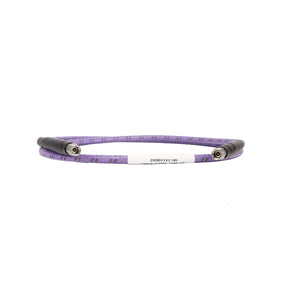


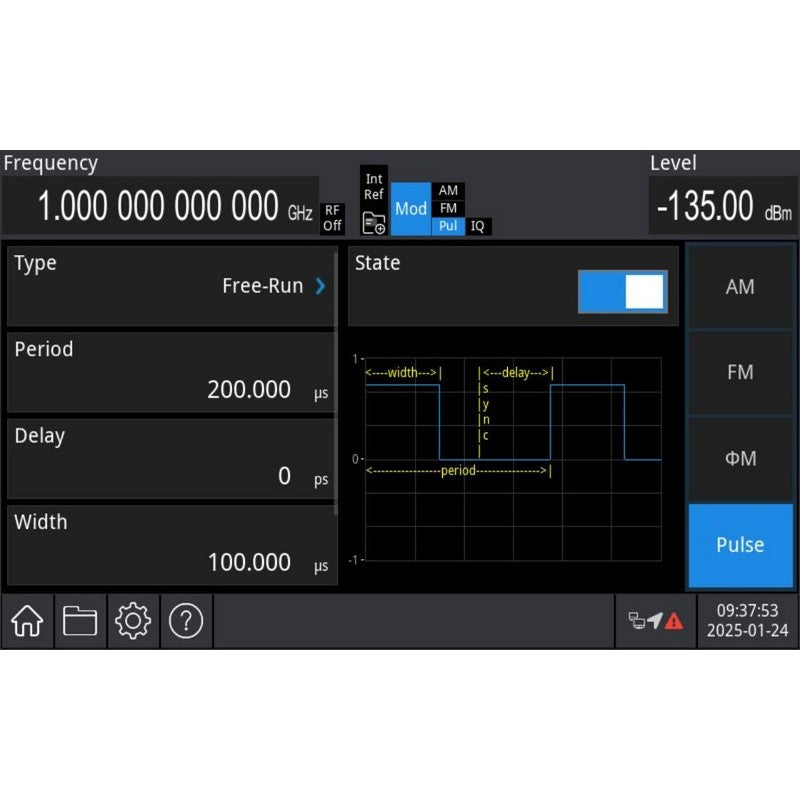
Overview
The USG3045V is a 4.5 GHz vector signal generator covering 9 kHz to 4.5 GHz with 0.001 Hz frequency resolution and a level range of −135 dBm to +25 dBm. Single-sideband phase noise typically < −122 dBc/Hz at 1 GHz / 20 kHz offset, amplitude accuracy ≤0.7 dB (Typ.), and frequency switching ≤40 ms make it suitable for both bench R&D and automated test workflows. The USG3045V supports full vector modulation with a 150 MHz real-time baseband bandwidth.
As a vector signal generator, the USG3045V adds a full real-time digital modulation engine to the analog signal-source foundation. With 150 MHz of baseband bandwidth, real-time QAM/PSK/FSK/ASK generation, ARB waveform-file playback, multi-carrier and multi-tone modes, and AWGN noise injection for receiver testing, the USG3045V addresses protocol-aware wireless R&D and commercial production test for 5G NR, WLAN, LTE, Bluetooth, ZigBee, and Z-Wave devices. Typical QPSK EVM is 0.4% at a 1 GHz carrier; 5G NR ACPR is typically < −55 dBc at a 3.8 GHz carrier. The USG3045V is suited to wireless-device R&D, calibration labs running spec verification, and commercial production-test stations.
Key Features
- 9 kHz to 4.5 GHz CW Frequency Range — >5 MHz to 4.5 GHz in I/Q mode; 0.001 Hz resolution across the full band.
- −135 dBm to +25 dBm Level Range — 160 dB dynamic range with 0.01 dB resolution and ≤0.7 dB amplitude accuracy typical.
- Phase Noise < −122 dBc/Hz at 1 GHz — single-sideband phase noise typical at 20 kHz offset for sensitive vector measurement.
- Electronic Step Attenuator Standard — 0 to 110 dB range with 10 dB steps; electronic attenuator switches faster with no moving contacts for high-cycle automation.
- Vector Modulation Accuracy — QPSK EVM 0.4% at 1 GHz typical; 5G NR ACPR < −55 dBc at 3.8 GHz typical.
- 150 MHz Real-Time Baseband Bandwidth — internal vector engine covers wideband modulation envelopes including Wi-Fi 6/7 channel widths.
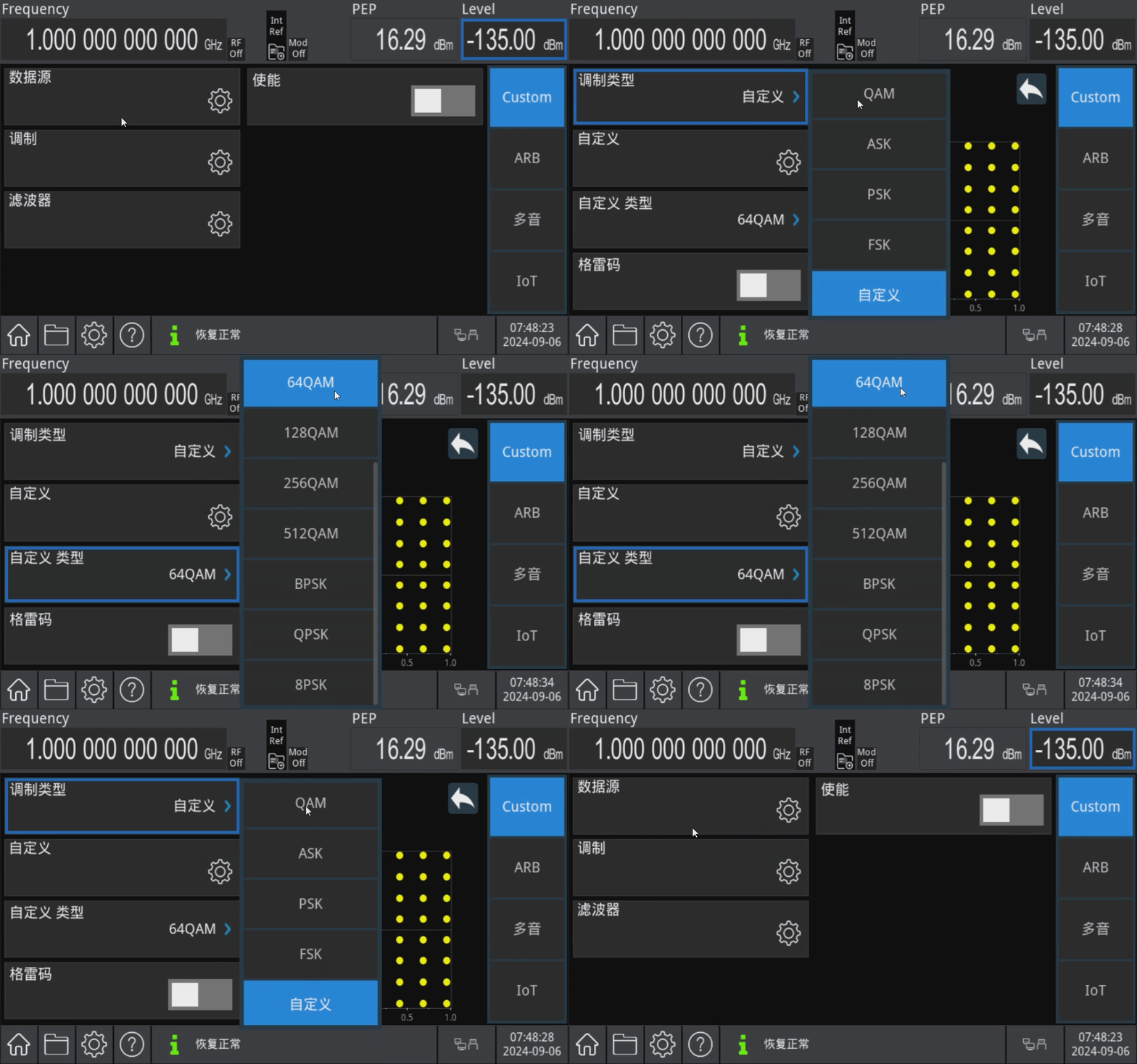
- Real-Time Digital Modulation — QAM, PSK, FSK, ASK with custom filter shapes (RRC, Gaussian, user-defined) and filling settings.
- ARB Playback, Multi-Carrier, and Multi-Tone Modes — user-defined waveform replay with carrier-aggregated and multi-tone test signal generation.
- Real-Time AWGN Injection — precise SNR control for receiver sensitivity and dynamic-range characterization.
- Native ZigBee and Z-Wave IoT Generation — protocol-aware signal generation for IoT module test and incoming inspection.
- Mobile-Comm Protocol Simulation — 5G NR, WLAN, LTE, Bluetooth, IoT waveform support with UNI-T SignalStudio software (sold separately).
- AM, FM, and ΦM Analog Modulation — internal, external, or internal + external sources alongside the digital engine.
- OCXO High-Stability Clock Source Standard — ≤±0.2 ppm/year aging, ≤±10 ppb temperature effects.
- Built-in 50 MHz Function/Arbitrary Waveform Generator — standard waveforms, sweep, and modulation from a separate LF output.
- 5-Inch Touch Screen with Signal-Flow Interface — full touch control with intuitive signal-flow-diagram interaction.
- LAN, USB Host, USB Device, I/Q Baseband I/O Standard — full SCPI automation via LabVIEW, Python, MATLAB, Excel; GPIB available as a factory-installed hardware option (must be ordered with the instrument).
- Web Control + Device Manager — browser-based remote access plus free PC management software (V2.5.0+).
- Optional Pulse Modulation — 80 dB on-off ratio with customizable pulse trains.
- Optional Narrow-Pulse Generator — 40 ns minimum width with 10 ns resolution for radar component test.
- Optional USB Power Sensor Support (USG3000-PK) — license-activated readback and flatness correction with a user-supplied USB power sensor.
- CE | cETLus | RoHS Compliant — meets common North American and European safety and environmental standards.
Detailed Features
High Spectral Purity for Sensitive Receiver and Component Test
Single-sideband phase noise typically below −122 dBc/Hz at 1 GHz with a 20 kHz offset is the headline spectral-purity figure that determines whether a generator can stimulate the device under test without contaminating the measurement. Low close-in phase noise matters for adjacent-channel rejection testing on receivers, image-rejection on mixers, and any narrowband filter characterization where the stimulus must be cleaner than the device's own passband behavior.
The clock-source architecture supports ≤±0.2 ppm/year aging rate, ≤±10 ppb temperature effects, and ≤±10 ppb line-voltage sensitivity — frequency reference stable enough for calibration-cycle use without external 10 MHz lock, though both 10 MHz reference input and 10 MHz output are available on the rear panel for multi-instrument synchronization.
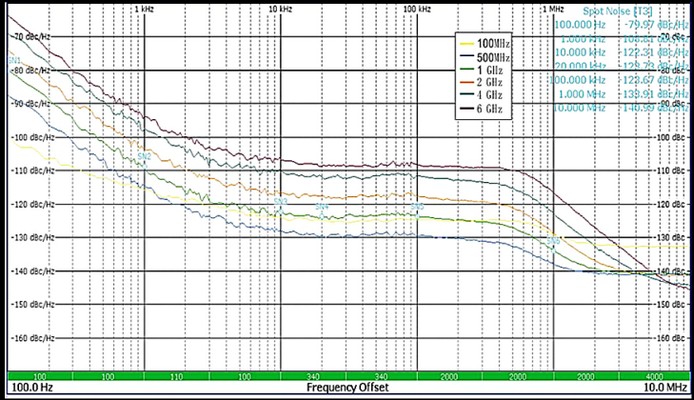 Single-sideband phase noise typical < -122 dBc/Hz at 1 GHz
 QPSK EVM 0.4% at 1 GHz, 5G NR ACPR <-55 dBc at 3.8 GHz (Typ.)
Real-Time Vector Modulation with 150 MHz Baseband Bandwidth
The internal vector engine provides 150 MHz of real-time baseband bandwidth and generates real-time QAM, PSK, FSK, and ASK modulation with user-configurable filter shapes (RRC, Gaussian, custom). User-defined custom modulation types with adjustable filling settings extend coverage across all critical communication formats. With QPSK at a 1 GHz carrier, measured EVM is 0.4% typical — calibration-grade. For 5G NR at 3.8 GHz, ACPR is < −55 dBc typical, so the instrument's own spectral regrowth doesn't dominate measurements on 5G receiver and transmitter validation work.
 160 dB output range with three ALC modes
Wide Output Range — +25 dBm Maximum, −135 dBm Minimum
Output settable range is −135 dBm to +25 dBm with 0.01 dB resolution. Maximum output power varies by frequency band and attenuator type: in the 250 MHz to 1.2 GHz band, the electronic attenuator delivers +20 dBm typical, while the mechanical attenuator option reaches +24 dBm. Above 1.2 GHz and through 3.6 GHz, electronic output is +18 dBm; mechanical-attenuator output is +22 dBm.
Three ALC (Automatic Level Control) modes are available: ALC Auto selects the optimum mode for the current operating state; ALC On runs closed-loop level control for CW, FM, and ΦM operation; ALC S&H (Off) freezes the closed-loop value on frequency or amplitude transitions, useful for AM and pulse modulation work where ALC interaction with the modulation envelope is undesirable.
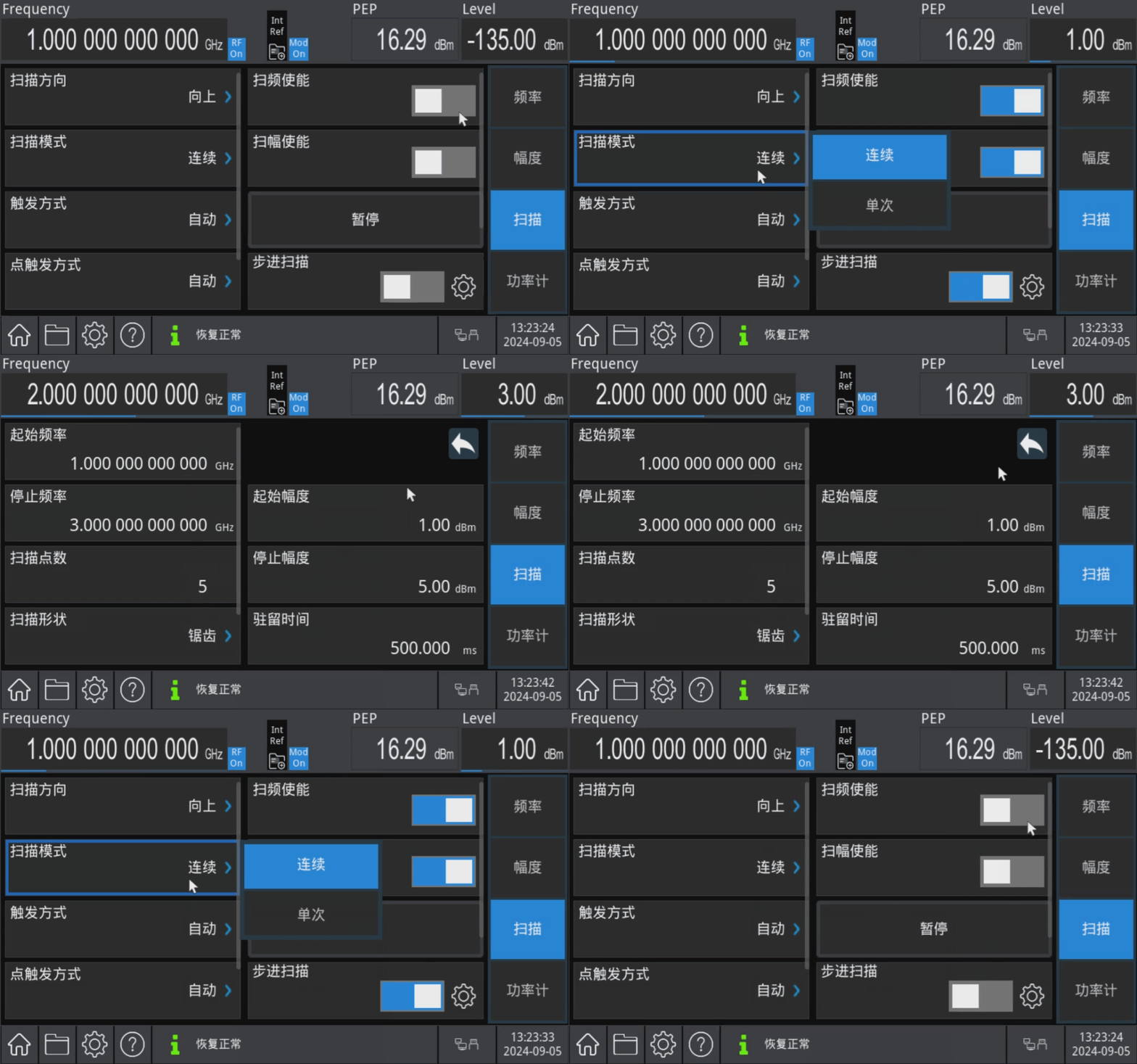 ARB playback with multi-carrier and multi-tone modes
ARB Playback, Multi-Carrier, and Multi-Tone Modes
ARB playback mode plays back user-defined arbitrary waveform data at variable sampling rates, with baseband preview that displays the waveform in both time and frequency domains before transmission. ARB multi-carrier mode splits wideband signals into multiple narrowband subcarriers, each independently modulated — simplifying construction of carrier-aggregated LTE/5G NR signals and multi-channel interference environments without external signal combiners. Multi-tone mode generates multiple frequency components simultaneously for intermodulation distortion testing, multi-channel receiver characterization, and spectrum-density emulation.
Real-Time AWGN Injection for Receiver Sensitivity Testing
The instrument provides both pure-noise output and real-time additive white Gaussian noise injection, with precise signal-to-noise power control — no separate noise measurement step required before each test. For receiver sensitivity verification, blocking and selectivity testing, and dynamic-range characterization, AWGN injection is the workhorse stimulus. Controlling SNR digitally inside the same instrument that generates the modulated signal removes a measurement-uncertainty drift source on long-running production sequences.
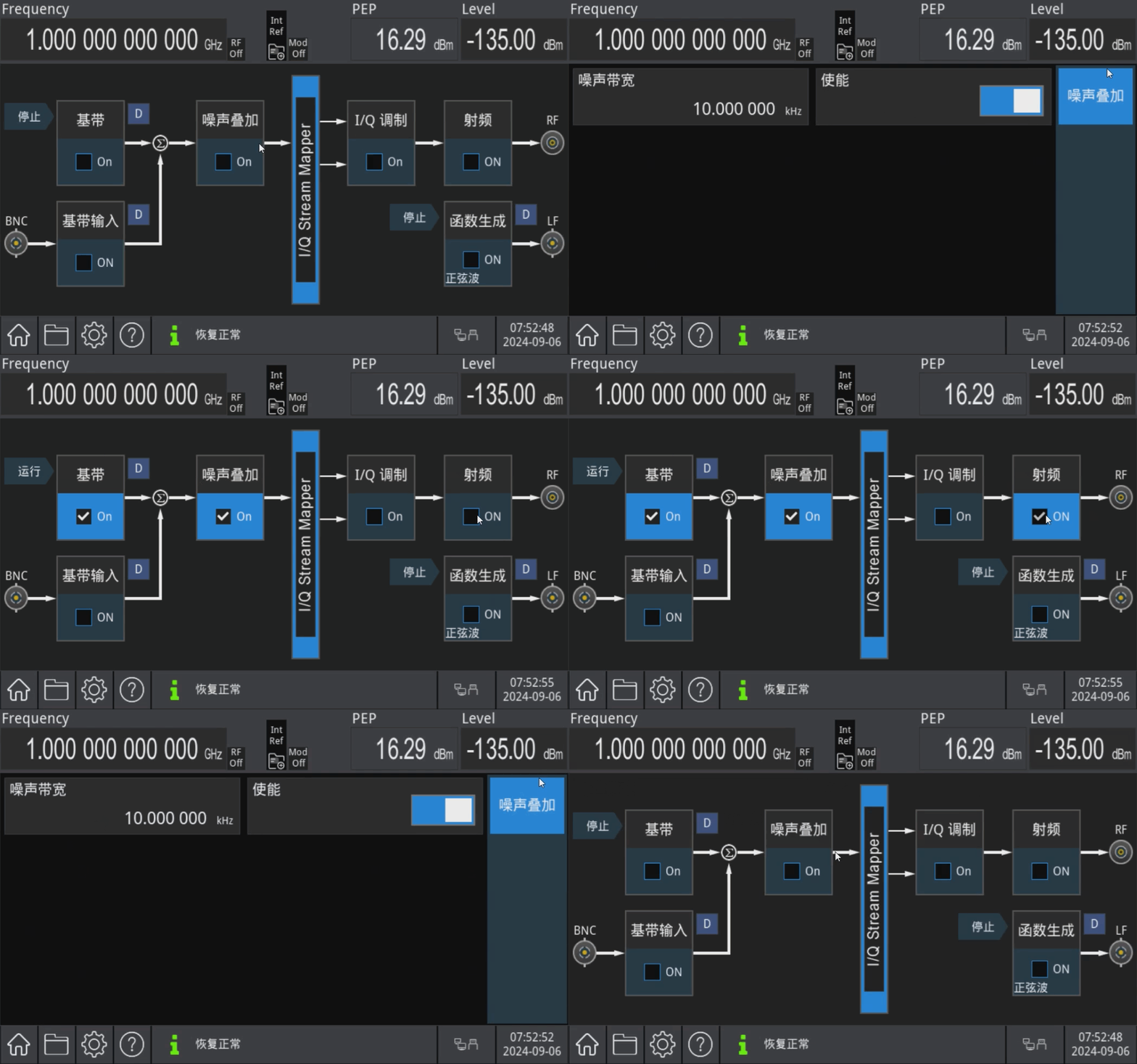 Real-time AWGN injection with precise SNR control
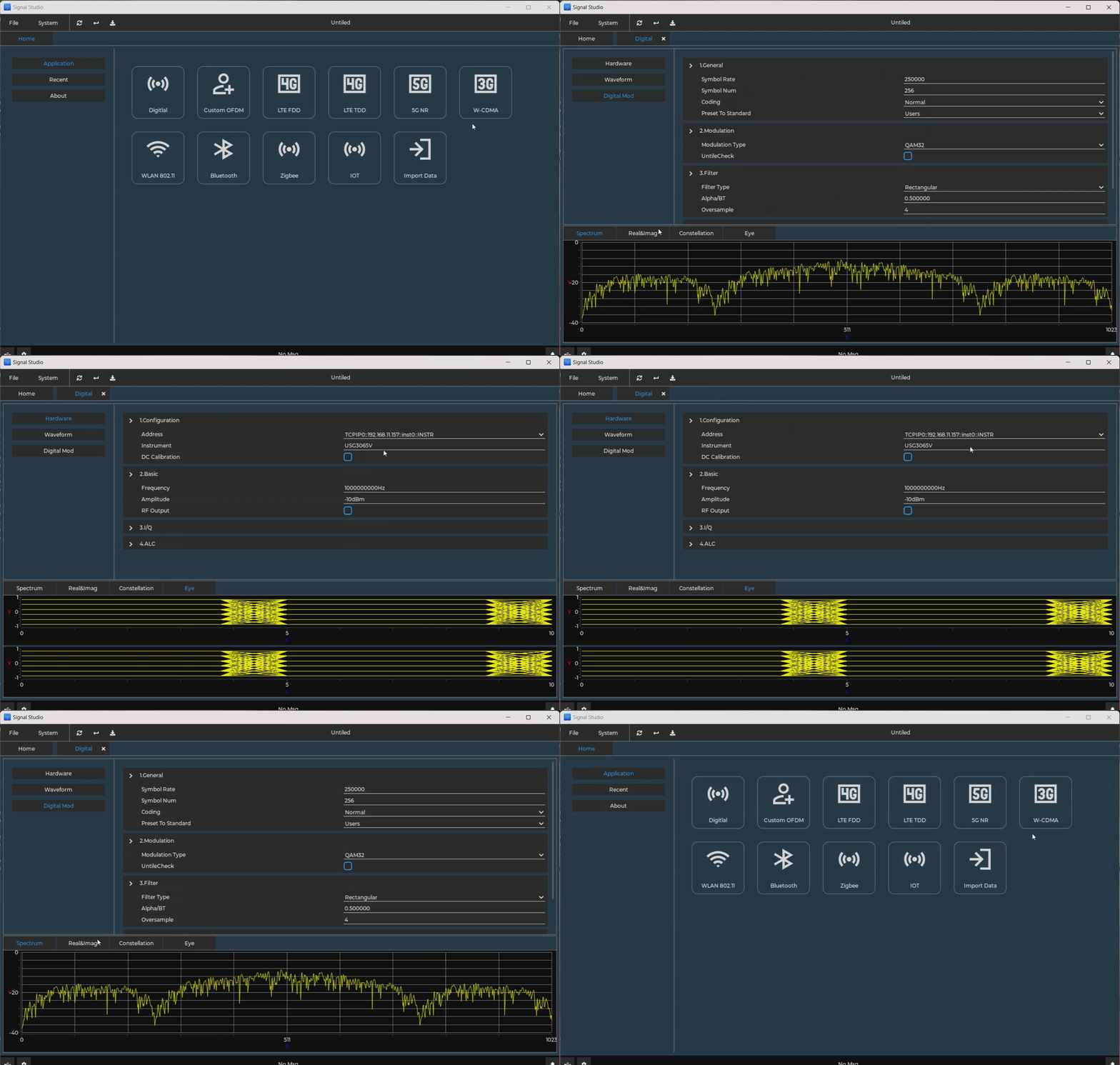 Native ZigBee, Z-Wave + 5G NR/WLAN/LTE/Bluetooth via SignalStudio
IoT and Mobile Communication Protocol Generation
Native ZigBee and Z-Wave signal generation is built into the instrument's vector engine with flexible modulation parameter settings per protocol — eliminating third-party IoT signal source dependencies for incoming inspection, R&D prototyping, and production-line stimulus. For 5G NR, WLAN, LTE, and Bluetooth waveforms, the instrument pairs with UNI-T's SignalStudio software (sold separately) for protocol-compliant signal simulation across commercial wireless-device R&D and compliance pre-screen.
Optional Pulse and Narrow-Pulse Generation
The optional pulse modulation package adds an on-off ratio of up to 80 dB with customizable pulse-train definitions, enabling single-instrument pulsed RF for radar component test, time-gated stimulus, and EMC pulsed-emission work. The narrow-pulse generator option extends capability to a 40 ns minimum width with 10 ns resolution, addressing test requirements of millimeter-wave radar components used in commercial automotive ADAS suppliers and short-range industrial radar systems.
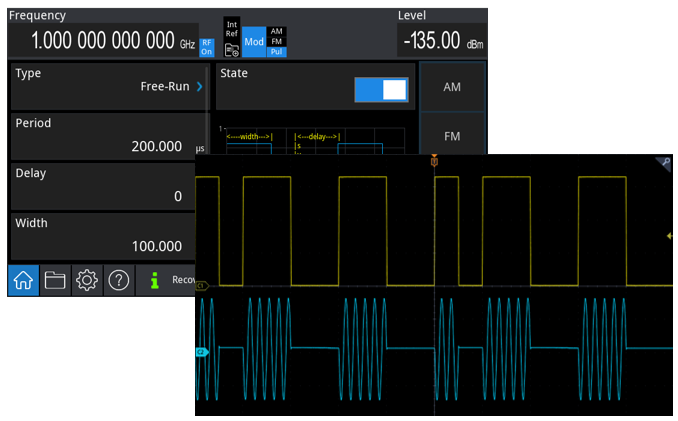 Pulse modulation with 80 dB on-off ratio and narrow-pulse generation
USB Power Sensor Support — Flatness Correction at the DUT Plane (Option USG3000-PK)
The optional USG3000-PK software license enables the instrument to read and display power measurements from a user-supplied USB power sensor connected to the front-panel USB Host port. The license is delivered as a file that installs from a USB stick via the instrument's Option Install menu, following the same activation workflow as the Pulse Modulation and GPIB options. A USB power sensor is not included; the user supplies a compatible sensor.
Once activated, the Power Sensor menu provides measurement frequency entry, frequency coupling to the current RF carrier (with multiplier and offset for harmonic and IF-shifted measurements), measurement averaging, and amplitude offset entry — the standard tools for flatness correction and cable-loss compensation at the DUT plane. The amplitude offset entry is particularly useful when the signal path between the generator and the device under test includes cables, attenuators, or amplifiers: the displayed power reflects what the DUT actually sees, not what leaves the generator's output connector.
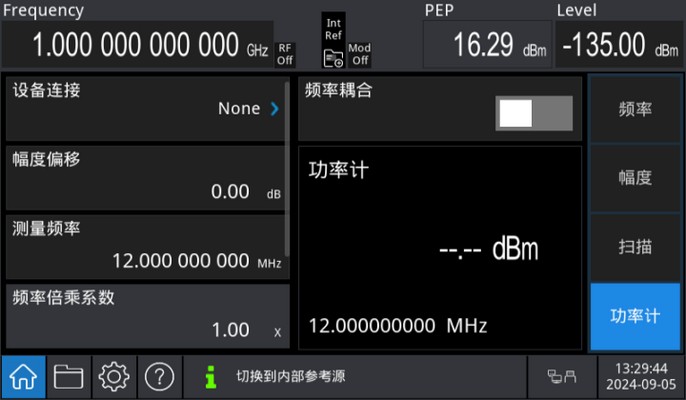 License-activated USB power sensor support — user supplies sensor
5-Inch Touch UI with Signal-Flow Interface
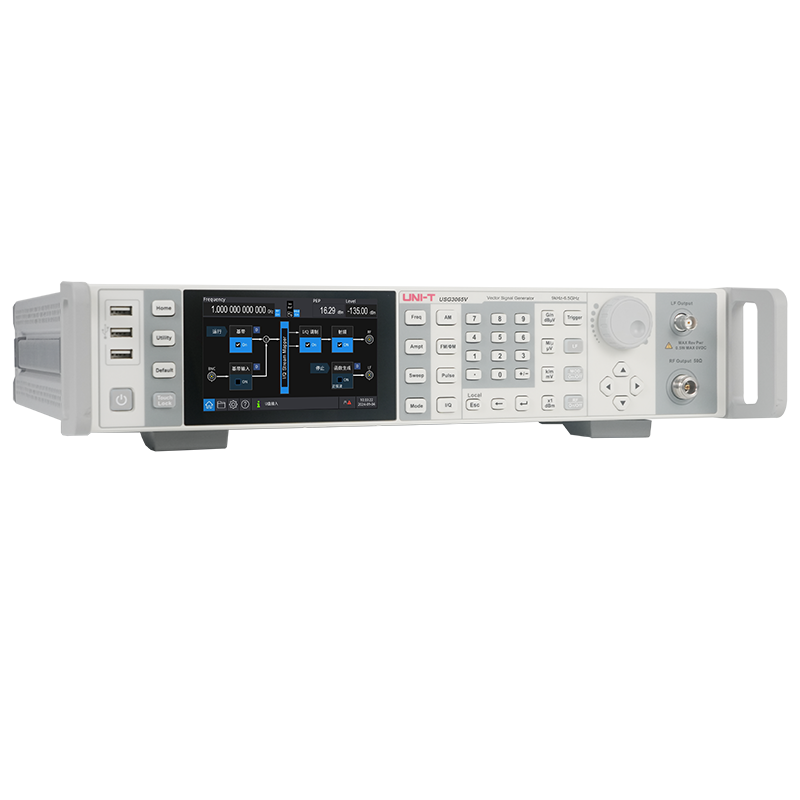
A 5.0-inch high-resolution touch screen provides full touch control over every function except the power switch. The interface is built around a signal-flow diagram — the user sees modulation source, modulation type, sweep mode, and RF carrier as a connected chain rather than as scattered menu items. For an instrument with this much configurable surface area (multiple modulation paths, multiple sweep modes, multiple digital protocols, ARB and multi-carrier work, optional pulse and power-meter kits), the signal-flow paradigm meaningfully cuts setup time on R&D benches where the test configuration changes hour-to-hour.
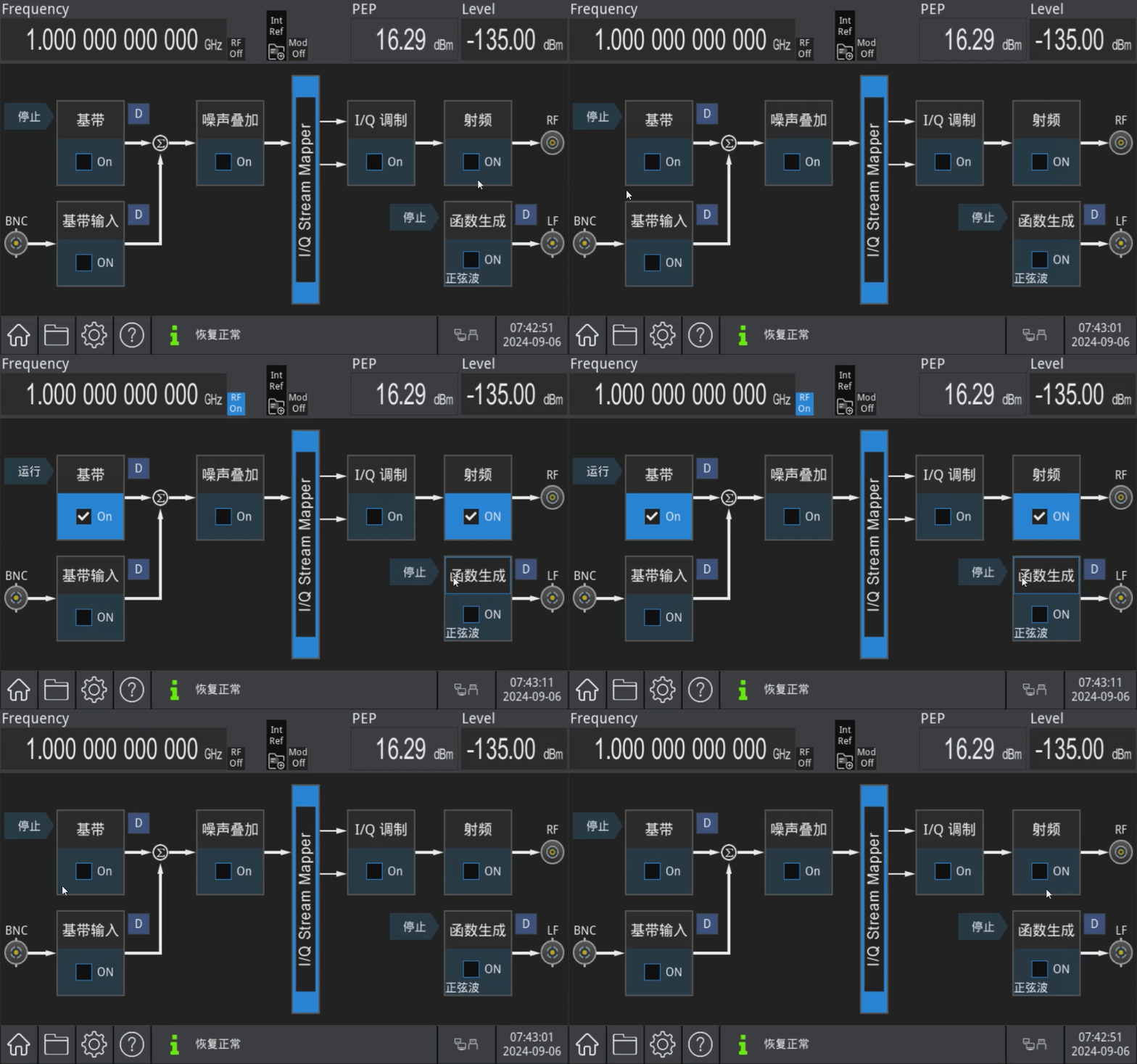 5-inch touch screen with signal-flow-guided interface
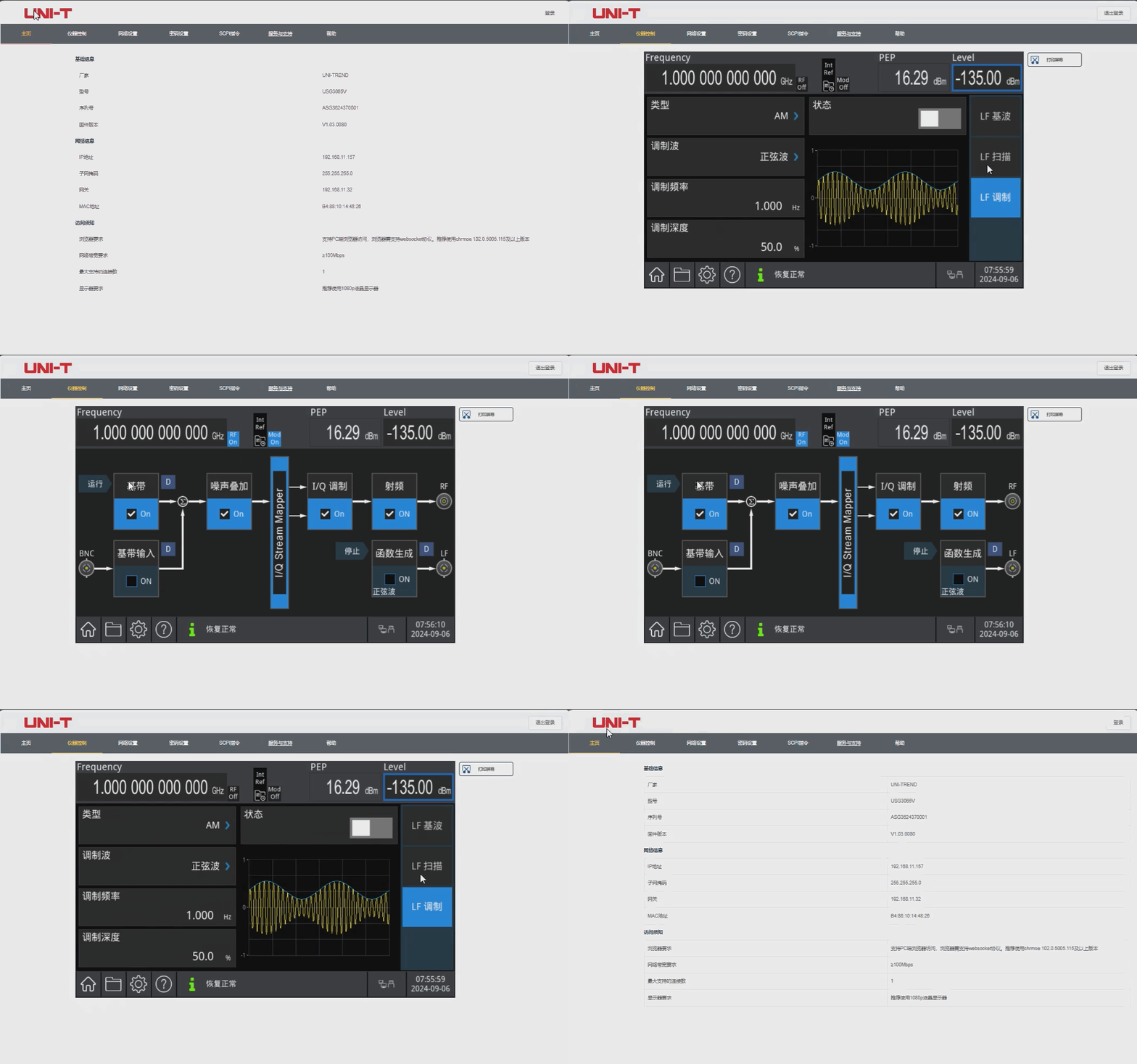 LAN, USB, GPIB (factory option) with SCPI, Web Control, and Device Manager
Full Automation — SCPI, Web Control, Device Manager
LAN, USB Host, and USB Device are standard rear-panel interfaces. GPIB is available as a factory-installed hardware option and must be ordered with the instrument. All ports speak the standard SCPI command set, enabling remote operation from any automation-capable host. Test engineers commonly drive the instrument from LabVIEW, Python, MATLAB, or even Excel macros for batch command execution.
Web Control provides browser-based remote access — point a PC or mobile browser at the instrument's IP address and the full front-panel UI is available remotely, with no client install. Device Manager (UNI-T's free PC software, V2.5.0 and higher) manages the instrument via LAN (VXI-11, Socket), USB Device (USB-TMC), or GPIB, and handles batch instrument inventories on a multi-station test floor.
Detailed Specifications
| Frequency range (CW mode) | 9 kHz to 4.5 GHz (CW mode) |
|---|---|
| Frequency range (I/Q mode) | >5 MHz to 4.5 GHz (I/Q mode) |
| Frequency resolution | 0.001 Hz |
| Phase offset step | 0.1° |
| Frequency switching speed | ≤40 ms (SCPI / list / step sweep) |
| Level settable range | -135 dBm to +25 dBm |
| Level resolution | 0.01 dB |
| Amplitude accuracy (Typ.) | ≤0.7 dB |
| Attenuator type | Electronic attenuator standard (0 to 110 dB, 10 dB steps) |
| Phase noise (Typ.) | <-122 dBc/Hz @ 1 GHz, 20 kHz offset |
| Oscillator aging rate | ≤ ±0.2 ppm/year |
| Temperature effects | ≤ ±10 ppb |
| Initial calibration accuracy | ≤ ±40 ppb |
| Analog modulation | AM, FM, ΦM (internal / external / internal+external) |
| Digital modulation | QAM, PSK, FSK, ASK (real-time digital standard formats; custom modulation supported) |
| Baseband bandwidth | 150 MHz real-time baseband bandwidth |
| Vector modulation EVM (Typ.) | QPSK EVM 0.4% at 1 GHz carrier (Typ.) |
| 5G NR ACPR (Typ.) | 5G NR ACPR <-55 dBc at 3.8 GHz carrier (Typ.) |
| ARB modes | ARB playback, ARB multi-carrier, multi-tone |
| Noise injection | AWGN (additive white Gaussian noise) for receiver testing |
| IoT protocols (native) | ZigBee, Z-Wave (IoT signal generation and playback) |
| Mobile-comm protocol simulation | 5G NR, WLAN, LTE, Bluetooth, IoT (with SignalStudio software, sold separately) |
| Pulse modulation (option) | 80 dB on-off ratio, customizable pulse trains |
| Narrow pulse (option) | Min width / resolution: 40 ns / 10 ns |
| USB power sensor (option USG3000-PK) | License-activated; flatness correction with user-supplied USB power sensor |
| Sweep modes | Step sweep, list sweep (frequency, amplitude) |
| Step sweep points | 2 to 65535 |
| List sweep points | 1 to 500 |
| Dwell time | 100 μs to 100 s |
| Built-in AWG | 50 MHz function / arbitrary waveform generator |
| Reference (10 MHz) | 10 MHz (in/out, 50 Ω) |
| Display | 5.0-inch touch screen, signal-flow-guided interface |
| Standard interfaces | LAN, USB Host, USB Device, I/Q baseband I/O (GPIB optional) |
| Remote control | SCPI, Web Control (browser), Device Manager (PC software, V2.5.0+) |
| Certifications | CE | cETLus |
| RoHS | Compliant |
Specifications subject to change without notice. "Typ." values represent typical performance and are not warranted.
Applications
Protocol-Aware Wireless Device Development
- 5G NR Sub-6 GHz and Wi-Fi 6 R&D — Full vector modulation with 0.4% QPSK EVM and < −55 dBc 5G NR ACPR through 4.5 GHz — suited to 5G NR sub-6 GHz device R&D, Wi-Fi 6 transmitter and receiver test, and Bluetooth 5.x development.
- QAM, PSK, FSK, ASK Real-Time Digital Modulation — Custom filter shapes (RRC, Gaussian, user-defined) for protocol-specific test signal generation.
- ARB Multi-Carrier Mode — Carrier-aggregated LTE / 5G NR test signals without external combiners.
- AWGN Injection — Real-time noise injection for receiver sensitivity and dynamic-range characterization.
Commercial Production Test and Calibration Labs
- Production Test for 5G NR and Wi-Fi 6 Modules — Fast frequency switching, SCPI automation, and 0.4% QPSK EVM vector accuracy for high-volume commercial production lines.
- Calibration-Grade Vector Modulation Accuracy — QPSK EVM 0.4% typical at 1 GHz supports commercial cal-lab spec verification.
- USB Power Sensor Integration — Optional USG3000-PK license activates flatness correction at the DUT plane with a user-supplied USB power sensor.
- OCXO Clock Source Standard — ≤±0.2 ppm/year aging suits calibration-cycle scheduling.
IoT Device R&D and Compliance Pre-Screen
- ZigBee, Z-Wave, and Bluetooth IoT Test — Native protocol generation at 2.4 GHz eliminates third-party IoT signal source dependencies for receiver test.
- Native ZigBee and Z-Wave Generation — Flexible modulation parameter control (modulation count, modulation method) per protocol.
- SignalStudio Protocol Simulation — 5G NR / WLAN / LTE / Bluetooth waveform support via UNI-T SignalStudio software (sold separately).
- Multi-Tone Mode — IoT mesh-network coexistence and interference testing.
Accessories & In the Box
Included
- USG3045V RF signal generator
- AC power cord (region-specific)
- USB data cable
- Quick start guide and certificate of conformity
Recommended Accessories
- USG3000-PM — Pulse modulation option (license-activated; 80 dB on-off ratio, customizable pulse trains).
- USG3000-PG — Narrow-pulse generator option (license-activated; 40 ns minimum width, 10 ns resolution).
- USG3000-PK — USB power sensor support option (license-activated; user supplies a compatible USB power sensor).
- USG3000-GPIB — GPIB interface hardware option; adds a factory-installed IEEE 488 port for legacy automation systems. Must be ordered with the instrument — cannot be added after purchase.
- SignalStudio + waveform licenses — UNI-T SignalStudio software (sold separately) with optional waveform-playback license packages: BT (Bluetooth), OFDM (custom OFDM), DM (custom digital modulation), VIOT (extended IoT).
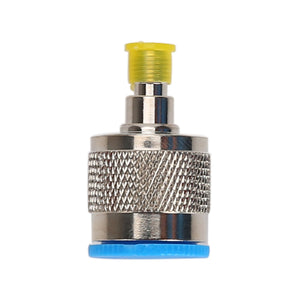
- SMA cables and adapters — UT-W01-6GHz NJ-NJ DC-6 GHz cable, UT-W02-6GHz SMAJ-NJ DC-6 GHz cable, UT-C01-6GHz SMA-N adapter, UT-C02-4GHz N-BNC adapter.
Family Members
- USG3045M — 4.5 GHz analog, electronic attenuator.
- USG3045M-P — 4.5 GHz analog, mechanical attenuator.
- USG3065M — 6.5 GHz analog, electronic attenuator.
- USG3065M-P — 6.5 GHz analog, mechanical attenuator.
- USG3045V-P — 4.5 GHz vector, mechanical attenuator.
- USG3065V — 6.5 GHz vector, electronic attenuator.
- USG3065V-P — 6.5 GHz vector, mechanical attenuator.
Frequently Asked Questions
What is the difference between the V-series and the M-series?
The M-series is an analog RF signal generator (AM, FM, ΦM with optional pulse and narrow-pulse modulation) suited to amplifier and filter R&D, receiver calibration, and pulsed-RF component test. The V-series adds a full real-time digital modulation engine on the same analog foundation: 150 MHz baseband bandwidth, QAM/PSK/FSK/ASK, ARB playback with multi-carrier, AWGN injection, and native ZigBee/Z-Wave IoT generation. SignalStudio software (sold separately) extends V-series coverage to 5G NR/WLAN/LTE/Bluetooth. M addresses component-level stimulus; V addresses protocol-aware wireless device development.
What is the difference between the USG3045V and the −P variant?
The USG3045V ships with an electronic step attenuator as standard; the −P variant substitutes a mechanical step attenuator. Both provide 0–110 dB range with 10 dB steps. Mechanical attenuators deliver higher absolute output power (~+4 dB above electronic at the 250 MHz–3.6 GHz bands); electronic attenuators switch faster and have longer service life. Choose mechanical for maximum output headroom, electronic for high-cycle automation.
What automation interfaces are standard?
LAN, USB Host, and USB Device are standard rear-panel interfaces. GPIB is available as a factory-installed hardware option (must be ordered with the instrument). All ports support the standard SCPI command set, so the instrument drops into any existing automated test station (LabVIEW, Python, MATLAB, Excel) without protocol translation. Web Control provides browser-based remote access via the instrument's IP address — no client install required, works from PC and mobile. UNI-T's free Device Manager PC software (V2.5.0 and higher) handles batch instrument inventories via LAN (VXI-11, Socket), USB Device (USB-TMC), or GPIB.
What does the USG3000-PK power sensor option provide?
USG3000-PK is a software license that activates USB power sensor support in the instrument. The user connects a compatible USB-TMC power sensor (sold separately) to the front-panel USB Host port; the instrument displays the power measurement on its own screen with menu controls for measurement frequency, frequency coupling (multiplier + offset), amplitude offset for path-loss compensation, and averaging. The primary use case is flatness correction and cable-loss compensation at the DUT plane — the amplitude offset entry compensates for cables and adapters between the generator and the device under test. License is activated via UNI-T's standard option-install workflow.
Warranty
This instrument is backed by UNI-T's 3+2 Year Warranty — 3 years of standard coverage, plus 2 additional years free when you register your product. That's 5 years of total protection at no extra cost.
The warranty covers manufacturing defects and component failures under normal use conditions. UNI-T instruments are built for professional daily use, and our warranty reflects that commitment to long-term reliability.
| Frequency Range | 9kHz - 4.5GHz | ||||||||
|---|---|---|---|---|---|---|---|---|---|
| Modulation Types | AM|FM|ΦM|Pulse|IQ | ||||||||
| Mechanical Attenuator | ✗ | ||||||||
| Instrument Type | Vector RF Generator | ||||||||
| Maximum Output Power |
|
||||||||
| Phase Noise |
|
Features
- LF Generator
- Touch Screen
Full specifications (48)
| Details | |||||||
|---|---|---|---|---|---|---|---|
| Level Range | -135dBm - +25dBm | ||||||
| Level Accuracy | ≤0.7dB | ||||||
| Level resolution | 0.01dB | ||||||
| Frequency Resolution | 0.001Hz | ||||||
| Phase offset step | 0.1° | ||||||
| Frequency switching speed | ≤40ms | ||||||
| Step Attenuator | 0 - 110dB (10dB steps) | ||||||
| Sweep Type | List|Step | ||||||
| Sweep Points | 2 - 65535 (step)|1 - 500 (list) | ||||||
| Dwell time | 100μs - 100s | ||||||
| Harmonics |
|
||||||
| Non-harmonics |
|
||||||
| SWR | <1.8:1 | ||||||
| Pulse On-off Ratio | ≥80dBc (1MHz - 4.5GHz) | ||||||
| Narrow Pulse Width (min) | 40ns (option) | ||||||
| AM Depth | 0 - 100% | ||||||
| Reference Frequency | 10MHz in/out (50Ω) | ||||||
| Oscillator aging rate | ≤±0.2ppm/year | ||||||
| Initial calibration accuracy | ≤±40ppb | ||||||
| AWG Channels | 1 | ||||||
| AWG Frequency | 50MHz | ||||||
| Channels | 1Ch | ||||||
| Standard Waveforms | Sine|Square|Pulse|Triangular|Arbitrary|DC|Noise | ||||||
| Lf Frequency Range | 0.001Hz - 50MHz (sine) | ||||||
| Lf Amplitude Range | 1mVpp - 2Vpp | ||||||
| Lf Modulation | AM|FM|ΦM|Pulse|ASK|FSK|PSK|QAM | ||||||
| Features | |||||||
| Iq Frequency Range | >5MHz - 4.5GHz | ||||||
| Iq Modulation Bandwidth | 150MHz | ||||||
| Digital Modulation | ASK|PSK|FSK|QAM|MSK | ||||||
| Symbol Rate | 125Sps - 75MSps | ||||||
| Baseband Sample Rate | 1Sa/s - 250MSa/s | ||||||
| AWGN Bandwidth | 50MHz | ||||||
| Multi-tone | 2 - 20 tones | ||||||
| IoT protocols (native) | ZigBee|Z-Wave | ||||||
| Lf Sweep Modes | Linear|Logarithmic|Step | ||||||
| Lf Waveforms | Sine|Square|Pulse|Triangular|Arbitrary|DC|Noise | ||||||
| Built-in Signal Generator | Included | ||||||
| General Information | |||||||
| Display Size | 5in | ||||||
| Display Type | TFT LCD | ||||||
| Display Resolution | 800×480 | ||||||
| RF Connector | N-type (50Ω) | ||||||
| Interface | LAN|USB-Host|USB-Device (GPIB optional) | ||||||
| Power Consumption | <75W | ||||||
| Temperature effects | ≤±10ppb | ||||||
| Dimensions (W×H×D) | 449 × 100 × 474 mm | ||||||
| Weight | <20 kg | ||||||
| Warranty | 3+2 years | ||||||
| Certifications | CE|cETLus | ||||||
Data Sheets and Manuals
Check your instrument’s hardware revision before updating firmware — different hardware revisions take different builds.
Authentic UNI-T accessories are an affordable way to extend the functionality of your instrument.
USG3000 Options 4
Need to add specific functionality to your UNI-T instrument? Here are our options for specific applications and measurement types. Have a question? Contact us at 888-668-UniT (8648).

RF Accessories 11
UT-C01-6 GHz Adapter
$29.00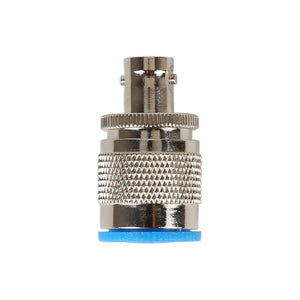
UT-C02-4 GHz Adapter
$29.00
UT-C03-18 GHz Adapter
$79.00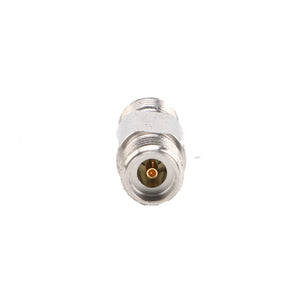
UT-C04-40 GHz Adapter
$79.00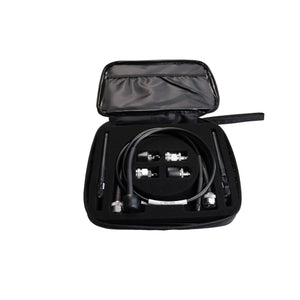
UT-CK01 Utility Kit
$262.00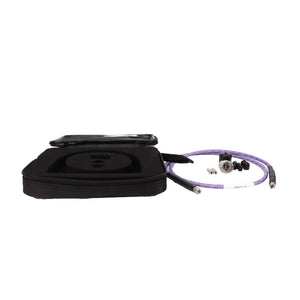
UT-CK02 Utility Kit
$389.00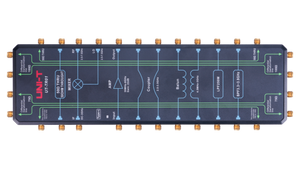
UT-TR01 RF Demonstration Board
$1,049.00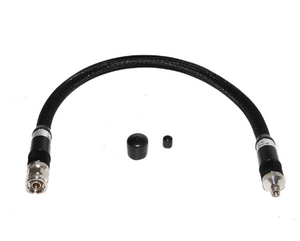
UT-VNA18-3.5M-NM VNA Test Cable Kit (18 GHz)
$525.00
UT-W01-6 GHz N-N RF Cable
$55.00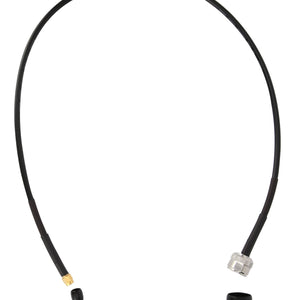
UT-W02-6 GHz N-SMA RF Cable
$55.00