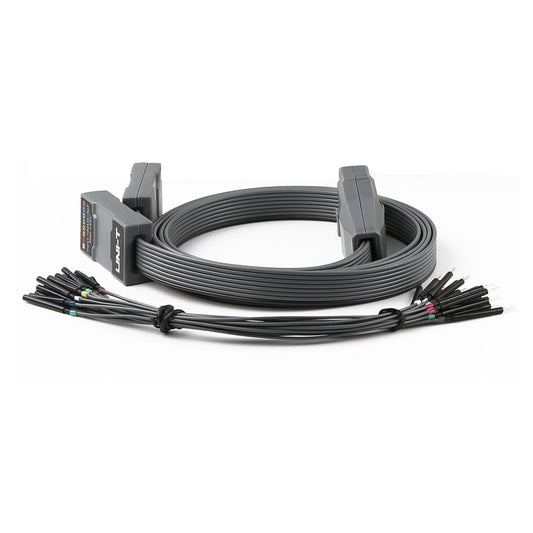
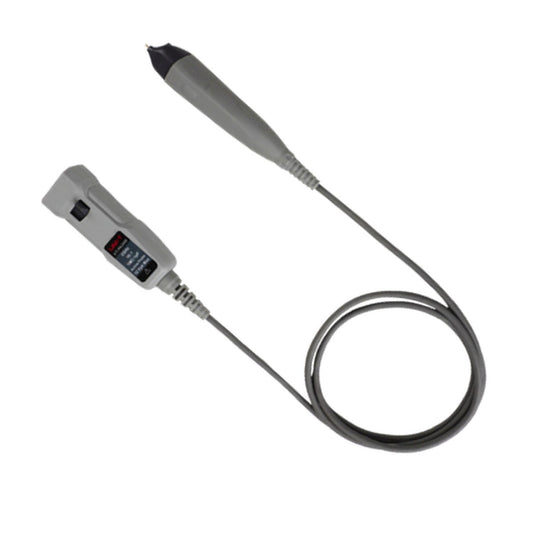
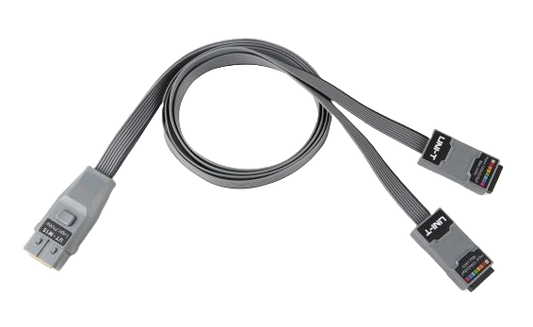
UNI-T UT-PD2500 Active Differential Probe
Premium 2.5GHz Bandwidth with Ultrafast 150ps Rise Time for Advanced High-Speed Analysis
The UNI-T UT-PD2500 is a premium-grade 2.5GHz active differential probe engineered for the most demanding high-speed signal analysis applications in advanced digital circuit design and protocol verification. With an ultrafast 150ps rise time, ±15V common-mode range, and <1pF input capacitance, this probe delivers exceptional signal fidelity for measuring the fastest serial buses, performing comprehensive signal integrity analysis, and conducting detailed jitter and eye diagram measurements. The UT-PD2500's 200kΩ differential input resistance ensures minimal circuit loading on sensitive high-speed designs, while automatic probe detection and calibration features streamline setup and maintain measurement accuracy. Compatible with UNI-T's MSO7000X, MSO8000HD, UPO7000L, MSO5000HD, MSO3000HD, and MSO3000X oscilloscope series, this probe is essential for engineers working on cutting-edge high-speed digital systems, multi-gigabit serial protocols, and advanced power integrity applications.
Key Features
-
2.5GHz Bandwidth: Industry-leading performance for the fastest modern digital systems
-
150ps Rise Time: Ultrafast response for precision edge detection and sub-nanosecond timing analysis
-
±15V Common-Mode Range: Exceptional voltage range for versatile measurement applications
-
±4V Input Dynamic Range: ±8Vpp differential measurement capability for modern logic levels
-
200kΩ Differential Input Resistance: Minimal circuit loading preserves signal integrity
-
<1pF Input Capacitance: Negligible loading for ultra-high-speed signal preservation
-
7mVrms Low Noise: Outstanding signal-to-noise ratio for clean, accurate measurements
-
Automatic Probe Detection: Seamless integration with compatible oscilloscopes
-
Front-End Button Control: Convenient probe offset adjustment and calibration at the measurement point
-
Professional Accessory Kit: Comprehensive probe tips and accessories for demanding applications
Premium Performance for Advanced High-Speed Analysis
The UNI-T UT-PD2500 delivers premium-grade performance with its 2.5GHz bandwidth and ultrafast 150ps rise time, providing the measurement fidelity required for today's most demanding high-speed applications. This exceptional combination enables accurate capture of multi-gigabit serial signals and fast-switching power electronics where timing margins are measured in picoseconds and signal quality directly impacts system reliability. The probe's superior bandwidth ensures that even the highest-frequency signal components are captured accurately, revealing subtle signal characteristics that lower-bandwidth probes would attenuate or distort.
With 200kΩ differential input resistance and <1pF input capacitance, the UT-PD2500 represents the gold standard for minimizing measurement-induced circuit loading. This exceptionally high input impedance is critical when probing sensitive high-speed designs where even fractional picofarads of capacitance can cause ringing, slow edge rates, or introduce reflections that compromise signal integrity. Engineers can confidently probe their circuits knowing that measurements reflect actual system behavior rather than probe-induced artifacts, enabling accurate debugging and validation of high-speed designs.
Advanced Differential Measurement Architecture
The UT-PD2500's sophisticated differential measurement architecture delivers superior common-mode noise rejection, essential for accurate measurements in the electrically harsh environments common in modern electronic systems. The probe's ±15V common-mode range accommodates signals referenced to various voltage levels throughout a system, while the ±4V input dynamic range (±8Vpp differential) handles the signal amplitudes found in contemporary digital logic, high-speed serial communications, and switched-mode power supplies.
The 40dB common-mode rejection ratio at 1MHz and 30dB at 1GHz ensures that ground bounce, power supply ripple, and other common-mode noise sources are effectively eliminated from measurements. This exceptional CMRR reveals the true differential signal even in noisy industrial or automotive environments where EMI and switching noise would completely obscure measurements made with single-ended probes. This capability is indispensable when debugging signal integrity issues in high-speed systems where separating real signal problems from environmental noise is critical to successful product development.
Comprehensive Support for Advanced Serial Protocols
The UT-PD2500's 2.5GHz bandwidth is specifically designed to support the most demanding modern high-speed serial communication protocols:
- USB 3.0/3.1 Gen 1 SuperSpeed differential signaling (5Gbps)
- PCI Express Gen 2/Gen 3 serial links
- Serial ATA II/III high-speed storage interfaces (3Gbps/6Gbps)
- 10 Gigabit Ethernet (10GbE) physical layer analysis
- HDMI and DisplayPort high-speed digital video interfaces
- Automotive CAN-FD high-speed variants
- Industrial Ethernet protocols (EtherCAT, PROFINET)
- LVDS high-speed differential signaling up to 2.5Gbps
- Advanced I2C, SPI, and other serial buses requiring superior signal fidelity
This extensive protocol coverage makes the UT-PD2500 an essential tool for engineers developing cutting-edge computing systems, data center equipment, automotive infotainment and ADAS systems, industrial automation platforms, and high-performance consumer electronics where multi-gigabit data rates are standard.
Intelligent Probe Features for Professional Workflows
The UT-PD2500 incorporates advanced automation features designed to streamline professional measurement workflows and ensure consistent accuracy:
- Automatic attenuation factor detection for correct oscilloscope channel scaling
- Automatic probe model recognition for proper system configuration
- Automatic serial number detection for asset management and calibration tracking
- Precision probe offset adjustment for accurate zero-point calibration
- Built-in calibration routines for maintaining long-term measurement accuracy
- Front-end button control for convenient adjustment without returning to oscilloscope
- Integrated status LED for immediate probe condition feedback
- ±4V offset range for flexible signal positioning within oscilloscope input range
These intelligent features eliminate manual configuration errors that can compromise measurement validity and productivity. The automatic detection capabilities are particularly valuable in professional test environments where multiple probes and measurement channels are used simultaneously, ensuring each channel is correctly configured without requiring tedious manual setup. The front-end control capability allows engineers to adjust probe parameters while maintaining focus on the circuit under test, significantly improving efficiency during iterative debugging sessions.
Professional Applications
Advanced Digital System Design
High-speed digital designers rely on the UT-PD2500's premium capabilities for:
- Multi-gigabit serial link signal integrity characterization
- High-speed differential clock distribution network analysis
- Sub-nanosecond timing margin verification
- Advanced eye diagram generation and analysis for link quality assessment
- Comprehensive jitter analysis including random and deterministic components
- Pre-compliance and full compliance testing for high-speed interface standards
- Signal quality validation for PCIe, USB 3.x, SATA, and other multi-gigabit protocols
Computing and Data Center Systems
Computer and server engineers leverage the UT-PD2500 for:
- PCI Express link training and equalization verification
- DDR4/DDR5 memory bus signal integrity analysis
- High-speed serial storage interface validation (NVMe, SAS)
- Server interconnect protocol debugging
- Backplane and high-speed connector characterization
- Data center networking interface verification
Automotive Advanced Driver Assistance Systems (ADAS)
Automotive electronics engineers depend on the UT-PD2500 for:
- High-speed automotive camera interface analysis (MIPI CSI-2)
- ADAS sensor communication link verification
- Automotive Ethernet (100BASE-T1, 1000BASE-T1) physical layer testing
- CAN-FD high-speed variant signal quality assessment
- Automotive infotainment high-speed serial bus debugging
- Autonomous vehicle communication protocol validation
High-Performance Communications Systems
Communications and networking engineers utilize the UT-PD2500 for:
- 10 Gigabit Ethernet physical layer characterization
- Optical transceiver electrical interface analysis
- SerDes link optimization and equalization tuning
- High-speed backplane signal integrity verification
- Network processor high-speed interface debugging
- Telecommunications equipment serial link validation
Advanced Power Electronics and Power Integrity
Power electronics engineers use the UT-PD2500 for:
- Fast-switching power converter waveform analysis
- GaN and SiC power device switching characteristic measurement
- Power distribution network impedance profiling
- High-speed voltage regulator transient response characterization
- Switching power supply conducted emission analysis
- Point-of-load converter output quality verification
- Power supply parasitic oscillation identification
Research and Development
R&D engineers across industries rely on the UT-PD2500 for:
- Novel high-speed interface protocol development
- Advanced semiconductor device characterization
- Next-generation communication standard validation
- High-frequency power electronics research
- Signal integrity methodology development
Technical Specifications
| Specification |
UT-PD2500 |
| Probe Bandwidth (-3dB) |
2.5GHz |
| Rise Time |
≤150ps |
| Input Capacitance |
<1pF |
| Input Resistance (Differential) |
200kΩ ±2% |
| Input Resistance (Single-ended) |
100kΩ ±2% |
| Output Impedance |
50Ω |
| DC Attenuation Ratio |
10:1±5% |
| Input Dynamic Range |
8Vpp (±4V DC or peak AC) |
| Input Common-mode Range |
±15V (DC to 100Hz)
±2.5V (>100Hz) |
| Input Offset Range |
±4V |
| DC Offset Accuracy |
Before calibration: <3% of current range
After calibration: <1% of current range |
| Maximum Input Voltage |
±30V (DC + peak AC), mains isolated |
| Flatness (25°C) |
Typical 0.5dB (100kHz-500MHz)
Typical 1dB (500MHz-2GHz) |
| Common-mode Rejection Ratio (CMRR) |
40dB at 1MHz, 40dB at 30MHz
30dB at 1GHz |
| Probe Noise (Equivalent to input end) |
7mVrms (@10:1) |
| Maximum Slew Rate |
30V/ns (differential, 10X)
15V/ns (single-ended, 10X) |
| Zero Offset Error (Equivalent to input end) |
Before calibration: <50mV
After calibration: <5mV |
| Transmission Delay |
≤7.5ns |
| Electronic Static Discharge (ESD) |
>8kV (100pF, 300Ω, HBM) |
General Specifications
| Specification |
Value |
| Weight |
<95g |
| Wire Length |
1.2 meters |
| Operating Temperature |
0°C to 40°C (32°F to 104°F) |
| Non-operating Temperature |
-40°C to 70°C (-40°F to 158°F) |
| Operating Humidity |
95%RH@40°C |
| Non-operating Humidity |
95%RH@65°C |
| Operating Altitude |
4,600 meters (15,092 ft) |
| Non-operating Altitude |
15,300 meters (50,197 ft) |
Compatible Oscilloscopes
- MSO7000X Series
- MSO8000HD Series
- UPO7000L Series
- MSO5000HD Series
- MSO3000HD Series
- MSO3000X Series
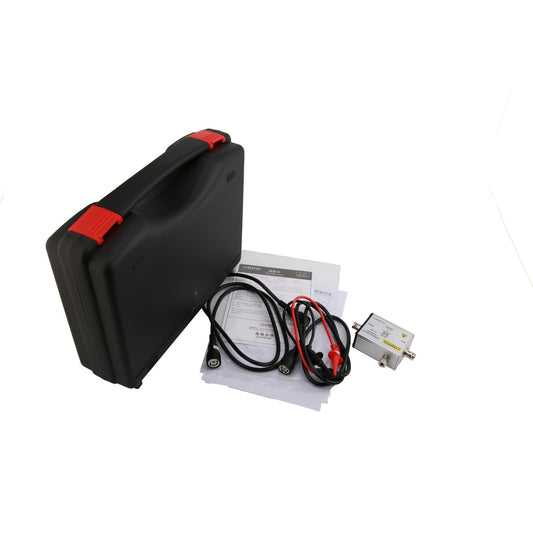
Standard Accessories
- Extension leads (1GHz) × 5 (UT-PD-F01)
- Straight probe tips (2.5GHz) × 10 (UT-PD-F03)
- Double probe tips (2.5GHz) × 10 (UT-PD-F04)
- Resistance straight tips (2.5GHz) × 10 (UT-PD-F06)
- Probe tip boxes × 2 (UT-PF01)
- Accessory box × 1 (UT-PF02)
- Identification rings × 8 (UT-PF03)
- User Manual
Optional Accessories
- Welded extension leads (1GHz) × 5 (UT-PD-F02)
- Tinned copper wire (50cm) × 1 (UT-PD-F05)
Product Comparison
| Feature |
UT-PD1500 |
UT-PD2500 |
| Bandwidth |
1.5GHz |
2.5GHz |
| Rise Time |
≤245ps |
≤150ps |
| Input Capacitance |
<1pF |
<1pF |
| Input Resistance (Differential) |
200kΩ ±2% |
200kΩ ±2% |
| Input Dynamic Range |
8Vpp (±4V) |
8Vpp (±4V) |
| Common-mode Range |
±15V (DC to 100Hz) |
±15V (DC to 100Hz) |
| CMRR at 1GHz |
30dB |
30dB |
| Probe Noise |
7mVrms |
7mVrms |
| Maximum Input Voltage |
±30V (mains isolated) |
±30V (mains isolated) |
| Ideal Applications |
USB 2.0, CAN, I2C, SPI, Serial buses up to 1.5Gbps |
USB 3.0, PCIe, SATA III, 10GbE, Serial buses up to 2.5Gbps |
| Price Point |
Professional |
Premium |
Frequently Asked Questions
How does the 2.5GHz bandwidth enable measurement of multi-gigabit serial signals?
The UT-PD2500's 2.5GHz bandwidth is specifically engineered to accurately capture multi-gigabit serial signals that are increasingly common in modern electronics. For proper signal analysis, measurement bandwidth should be 3-5 times the signal's fundamental frequency to accurately capture harmonic content and preserve edge fidelity. With 2.5GHz bandwidth, the UT-PD2500 can accurately measure signals with fundamental frequencies up to 500-833MHz, which translates to data rates of 1-5Gbps depending on encoding scheme. This encompasses USB 3.0 SuperSpeed (5Gbps), PCIe Gen 2 (5GT/s), SATA III (6Gbps), and many other contemporary high-speed interfaces where accurate signal capture is essential for debugging and validation.
What makes the 150ps rise time critical for advanced signal integrity analysis?
The UT-PD2500's ultrafast 150ps rise time is crucial because modern high-speed digital signals have increasingly fast edge rates that directly impact timing margins and signal quality. A probe's rise time must be significantly faster than the signals being measured to avoid distorting edge transitions. With 150ps rise time, the UT-PD2500 can accurately capture edges as fast as 200-300ps, which is essential for multi-gigabit serial links where bit periods are measured in hundreds of picoseconds. This capability enables accurate setup/hold time verification, jitter component identification, and eye diagram generation—critical measurements for ensuring high-speed link reliability. Slower probes would round off fast edges, masking timing violations and signal integrity issues that could cause system failures.
When should I choose the UT-PD2500 over the UT-PD1500?
Choose the UT-PD2500 when working with data rates above 1.5Gbps or when signal edge rates are faster than 300ps. The UT-PD2500 is essential for USB 3.0/3.1, PCIe Gen 2/Gen 3, SATA III, 10 Gigabit Ethernet, and other multi-gigabit protocols where the additional bandwidth and faster rise time directly impact measurement accuracy. The UT-PD2500 is also preferred for advanced power electronics applications involving GaN or SiC devices with extremely fast switching transitions, and for any research or development work on next-generation high-speed interfaces. If your applications primarily involve USB 2.0, standard CAN/CAN-FD, I2C, SPI, or other protocols operating below 1.5Gbps, the UT-PD1500 provides excellent performance at a lower price point.
How does the differential architecture benefit high-speed serial bus measurements?
The UT-PD2500's differential architecture is essential for modern high-speed serial buses because these protocols transmit data as voltage differences between two signal lines rather than relative to ground. This differential signaling provides inherent noise immunity, but requires differential measurement to observe the actual data signal. The probe's 40dB common-mode rejection ratio at 1MHz effectively eliminates ground bounce, power supply noise, and electromagnetic interference that would completely obscure the signal in single-ended measurements. This is particularly critical in electrically noisy environments like automotive systems or industrial equipment where common-mode noise levels can exceed the differential signal amplitude. The ±15V common-mode range also allows measurement of differential signals riding on various DC bias levels without requiring signal conditioning.
What role does the <1pF input capacitance play in measurement accuracy?
The UT-PD2500's <1pF input capacitance is critical for preserving signal integrity when measuring high-speed circuits. Every probe adds some capacitive loading to the circuit under test, which acts as a low-pass filter that attenuates high-frequency components and slows rise times. At multi-gigabit data rates, even 2-3pF of probe capacitance can significantly distort the signal being measured, causing ringing, overshoot, and edge rate degradation that doesn't exist in the actual circuit. The UT-PD2500's minimal capacitance ensures you observe true circuit behavior rather than measurement artifacts. This is especially important when probing high-impedance nodes or when making measurements on transmission lines where impedance matching is critical. The low capacitance also minimizes probe-induced reflections that could corrupt data transmission in the system under test.
How do the automatic calibration features maintain long-term measurement accuracy?
The UT-PD2500's integrated calibration system compensates for temperature drift, component aging, and manufacturing tolerances to maintain measurement accuracy over the probe's lifetime. The automatic calibration routine measures the probe's actual DC offset and adjusts the oscilloscope's display accordingly, reducing offset error from <50mV to <5mV at the probe input. This precision is essential when measuring small signal variations or when absolute voltage accuracy is critical for power integrity analysis. Regular calibration using the probe's built-in routine ensures that measurement errors don't accumulate over time, maintaining the probe's specified ±1% DC offset accuracy. The front-end button control allows field calibration without requiring the probe to be disconnected from the circuit, minimizing workflow interruption during intensive debugging sessions.
What is the warranty coverage for the UT-PD2500?
UNI-T provides a 1-year warranty on the UT-PD2500, covering manufacturing defects and component failures under normal use conditions. This standard warranty protects your investment in premium measurement equipment. The probe's professional-grade construction, comprehensive accessory kit, and robust design support reliable long-term operation in demanding engineering and research environments.
Support and Warranty
UNI-T stands behind the UT-PD2500 with comprehensive technical support and a 1-year warranty. Our dedicated support team is available to assist with application questions, advanced measurement techniques, probe selection guidance, and warranty service. The extensive professional accessory kit ensures you have the right probe tips and connections for the most demanding measurement requirements.
Premium High-Speed Signal Analysis for Advanced Engineering Applications
The UNI-T UT-PD2500 Active Differential Probe represents the pinnacle of high-speed measurement capability for professional engineers working on cutting-edge digital systems. With its 2.5GHz bandwidth, ultrafast 150ps rise time, exceptional signal fidelity, and intelligent automation features, it delivers the measurement accuracy and performance needed for multi-gigabit serial protocol development, advanced signal integrity validation, and next-generation power electronics characterization. Whether you're developing USB 3.0 interfaces, validating PCIe links, analyzing high-speed storage protocols, or characterizing fast-switching power converters, the UT-PD2500 provides the measurement confidence and precision required for successful product development in today's most demanding applications.
Order Your UNI-T UT-PD2500 Today and Experience Premium High-Speed Measurement Capabilities