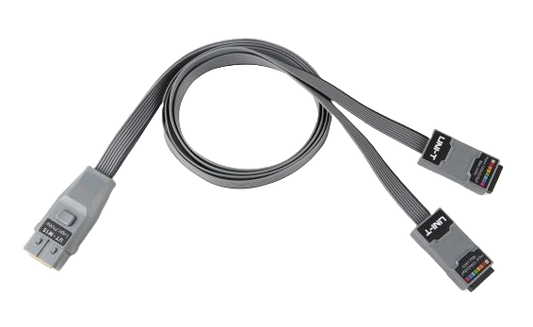
UNI-T UT-PD1500 Active Differential Probe
High-Speed Signal Analysis with 1.5GHz Bandwidth and Exceptional Signal Fidelity
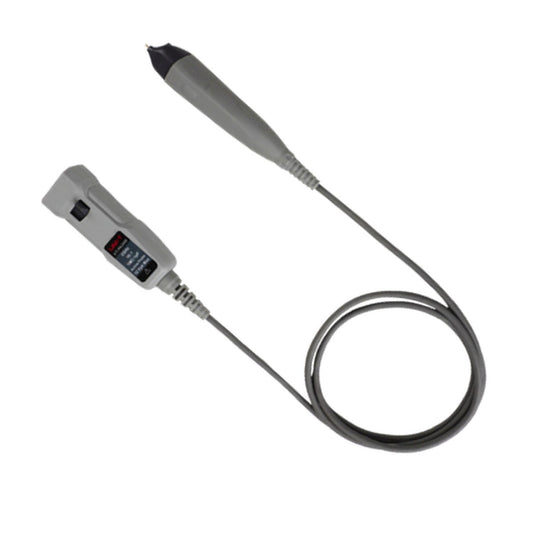
The UNI-T UT-PD1500 is a professional-grade 1.5GHz active differential probe engineered for high-speed signal analysis in modern digital circuit design and debugging. With ultrafast 245ps rise time, ±15V common-mode range, and <1pF input capacitance, this probe delivers exceptional signal fidelity for measuring high-speed serial buses, analyzing signal integrity, and performing jitter analysis. The UT-PD1500's 200kΩ differential input resistance ensures minimal circuit loading, while automatic probe detection and calibration features streamline setup and ensure measurement accuracy. Compatible with UNI-T's MSO7000X, MSO8000HD, UPO7000L, MSO5000HD, MSO3000HD, and MSO3000X oscilloscope series, this probe is essential for engineers working on high-speed digital designs, serial bus protocols, and power integrity applications.
Key Features
-
1.5GHz Bandwidth: Captures high-speed signals with exceptional accuracy for modern digital systems
-
245ps Rise Time: Ultrafast response for precise edge detection and timing analysis
-
±15V Common-Mode Range: Wide voltage range for versatile measurement applications
-
±4V Input Dynamic Range: ±8Vpp differential measurement capability
-
200kΩ Differential Input Resistance: Minimal circuit loading for accurate measurements
-
<1pF Input Capacitance: Negligible impact on high-speed signal integrity
-
7mVrms Low Noise: Exceptional signal-to-noise ratio for clean measurements
-
Automatic Probe Detection: Seamless integration with compatible oscilloscopes
-
Front-End Button Control: Convenient probe offset adjustment and calibration
-
Comprehensive Accessory Kit: Multiple probe tips and accessories for diverse applications
Professional High-Speed Signal Analysis Capabilities
The UNI-T UT-PD1500 delivers professional-grade performance for high-speed signal analysis with its 1.5GHz bandwidth and 245ps rise time. This combination ensures accurate capture of fast-rising edges and high-frequency signal components essential in modern digital circuit design. The probe's exceptional signal fidelity enables engineers to observe subtle signal characteristics that standard probes would distort or miss entirely, making it indispensable for debugging high-speed designs where timing margins are critical.
With 200kΩ differential input resistance and <1pF input capacitance, the UT-PD1500 minimizes circuit loading to preserve signal integrity during measurement. This high input impedance ensures that measurements reflect actual circuit behavior rather than probe-induced artifacts, which is particularly important when probing sensitive high-speed circuits where even minimal loading can alter signal characteristics and lead to incorrect conclusions during debugging.
Advanced Differential Measurement Technology
The UT-PD1500's differential measurement architecture provides superior common-mode noise rejection, essential for accurate measurements in electrically noisy environments. The probe's ±15V common-mode range accommodates signals referenced to various voltage levels, while the ±4V input dynamic range (±8Vpp differential) handles the signal amplitudes common in digital logic systems, communication interfaces, and power supply circuits.
The 40dB common-mode rejection ratio at 1MHz and 30dB at 1GHz ensures that ground noise and other common-mode signals are effectively eliminated from measurements, revealing the true differential signal. This capability is crucial when measuring high-speed serial buses where ground bounce and power supply noise can obscure the actual signal, allowing engineers to focus on real signal issues rather than measurement artifacts.
Comprehensive High-Speed Bus Protocol Support
The UT-PD1500 is specifically designed for analyzing modern high-speed serial communication protocols that require differential measurement capabilities:
- I2C and SPI serial interfaces for embedded systems
- CAN, CAN-FD, and LIN automotive communication buses
- Serial ATA storage interfaces
- Gigabit Ethernet (GbE) network connections
- USB 2.0 high-speed differential signaling
- FireWire (IEEE 1394b) data transfer protocols
This broad protocol support makes the UT-PD1500 an essential tool for embedded systems engineers, automotive electronics developers, and communications designers who need to verify signal integrity, debug protocol issues, and ensure compliance with industry standards across multiple bus technologies.
Intelligent Probe Features and Seamless Integration
The UT-PD1500 incorporates advanced features that streamline measurement setup and ensure accuracy:
- Automatic attenuation factor detection for correct oscilloscope scaling
- Automatic probe model recognition for proper configuration
- Automatic serial number detection for asset tracking
- Probe offset adjustment for precise zero-point calibration
- Built-in calibration routines for maintaining measurement accuracy
- Front-end button control for convenient parameter adjustment
- Probe status indication via integrated LED
These intelligent features eliminate manual configuration errors and ensure that engineers can focus on analyzing their circuits rather than managing probe settings. The automatic detection capabilities particularly benefit test environments where multiple probes are used, ensuring each measurement channel is correctly configured without manual intervention.
Professional Applications
Digital Circuit Design and Verification
Digital hardware engineers rely on the UT-PD1500's high-bandwidth capabilities for:
- High-speed serial bus signal integrity verification
- Differential clock distribution analysis
- Setup and hold time measurements on high-speed interfaces
- Eye diagram generation for communication link quality assessment
- Jitter analysis on clock and data signals
- Pre-compliance testing for signal quality standards
Embedded Systems Development
Embedded systems developers leverage the UT-PD1500 for:
- SPI and I2C communication debugging in microcontroller systems
- USB 2.0 differential signal validation
- Serial interface protocol analysis and timing verification
- Power integrity measurements on voltage regulators
- Switching noise characterization on power supplies
Automotive Electronics
Automotive engineers depend on the UT-PD1500 for:
- CAN and CAN-FD bus signal quality verification
- LIN bus communication analysis
- ECU communication interface debugging
- Automotive serial bus compliance testing
- In-vehicle network signal integrity assessment
Communications and Networking
Network and communications engineers utilize the UT-PD1500 for:
- Gigabit Ethernet physical layer analysis
- High-speed data link characterization
- Serial data transmission quality verification
- Network interface signal integrity testing
- Communication protocol timing analysis
Power Electronics and Power Integrity
Power electronics engineers use the UT-PD1500 for:
- Switching power supply noise analysis
- Power distribution network (PDN) impedance characterization
- Voltage regulator transient response measurement
- Power supply ripple and noise quantification
- DC-DC converter output quality assessment
Technical Specifications
| Specification |
UT-PD1500 |
| Probe Bandwidth (-3dB) |
1.5GHz |
| Rise Time |
≤245ps |
| Input Capacitance |
<1pF |
| Input Resistance (Differential) |
200kΩ ±2% |
| Input Resistance (Single-ended) |
100kΩ ±2% |
| Output Impedance |
50Ω |
| DC Attenuation Ratio |
10:1±5% |
| Input Dynamic Range |
8Vpp (±4V DC or peak AC) |
| Input Common-mode Range |
±15V (DC to 100Hz)
±2.5V (>100Hz) |
| Input Offset Range |
±4V |
| DC Offset Accuracy |
Before calibration: <3% of current range
After calibration: <1% of current range |
| Maximum Input Voltage |
±30V (DC + peak AC), mains isolated |
| Flatness (25°C) |
Typical 0.5dB (100kHz-500MHz)
Typical 1dB (500MHz-2GHz) |
| Common-mode Rejection Ratio (CMRR) |
40dB at 1MHz, 40dB at 30MHz
30dB at 1GHz |
| Probe Noise (Equivalent to input end) |
7mVrms (@10:1) |
| Maximum Slew Rate |
30V/ns (differential, 10X)
15V/ns (single-ended, 10X) |
| Zero Offset Error (Equivalent to input end) |
Before calibration: <50mV
After calibration: <5mV |
| Transmission Delay |
≤7.5ns |
| Electronic Static Discharge (ESD) |
>8kV (100pF, 300Ω, HBM) |
General Specifications
| Specification |
Value |
| Weight |
<95g |
| Wire Length |
1.2 meters |
| Operating Temperature |
0°C to 40°C (32°F to 104°F) |
| Non-operating Temperature |
-40°C to 70°C (-40°F to 158°F) |
| Operating Humidity |
95%RH@40°C |
| Non-operating Humidity |
95%RH@65°C |
| Operating Altitude |
4,600 meters (15,092 ft) |
| Non-operating Altitude |
15,300 meters (50,197 ft) |
Compatible Oscilloscopes
- MSO7000X Series
- MSO8000HD Series
- UPO7000L Series
- MSO5000HD Series
- MSO3000HD Series
- MSO3000X Series
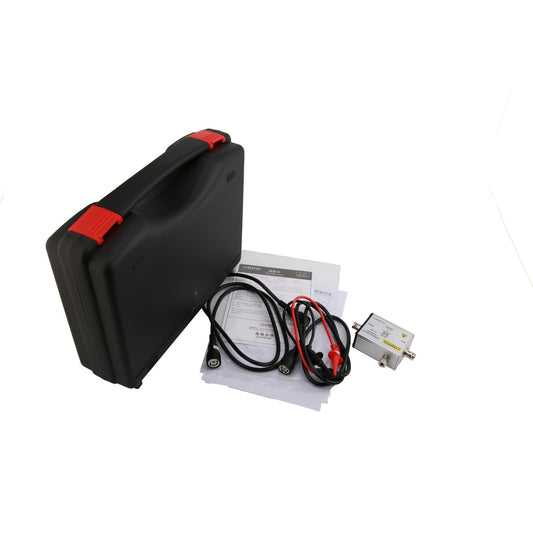
Standard Accessories
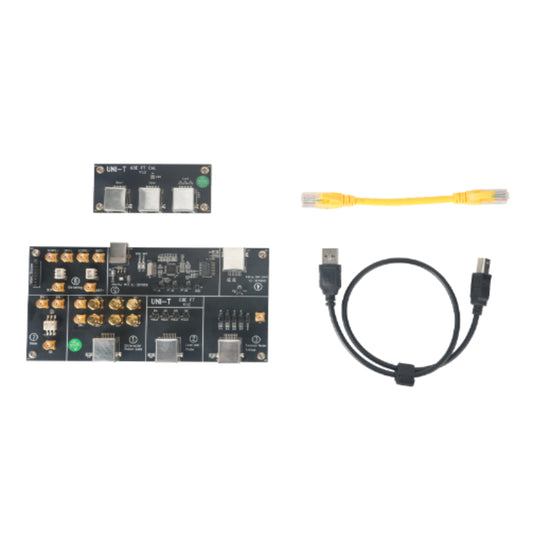
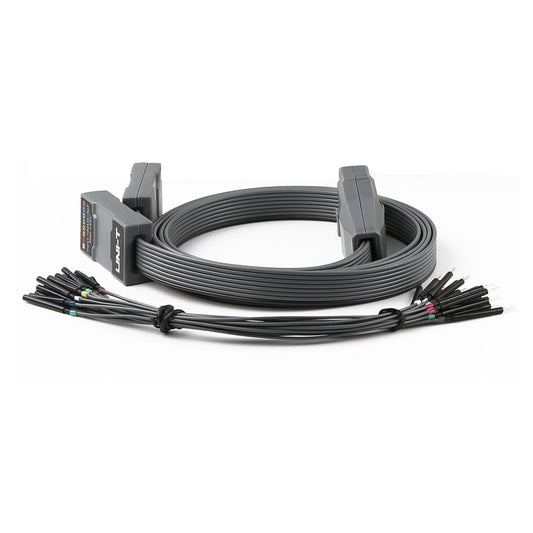
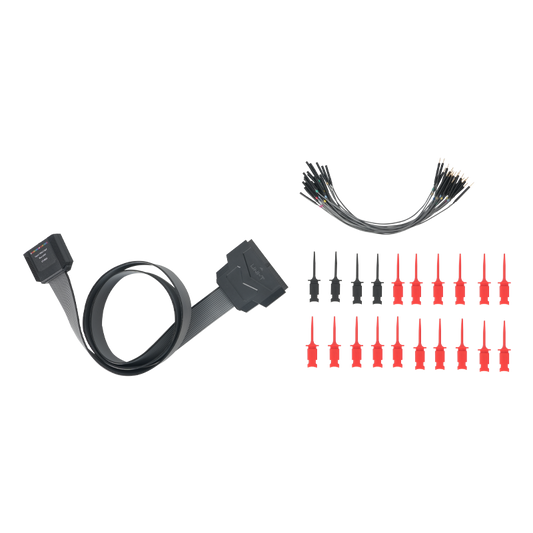
- Extension leads (1GHz) × 5 (UT-PD-F01)
- Straight probe tips (2.5GHz) × 10 (UT-PD-F03)
- Double probe tips (2.5GHz) × 10 (UT-PD-F04)
- Resistance straight tips (2.5GHz) × 10 (UT-PD-F06)
- Probe tip boxes × 2 (UT-PF01)
- Accessory box × 1 (UT-PF02)
- Identification rings × 8 (UT-PF03)
- User Manual
Optional Accessories
- Welded extension leads (1GHz) × 5 (UT-PD-F02)
- Tinned copper wire (50cm) × 1 (UT-PD-F05)
Product Comparison
| Feature |
UT-PD1500 |
UT-PD2500 |
| Bandwidth |
1.5GHz |
2.5GHz |
| Rise Time |
≤245ps |
≤150ps |
| Input Capacitance |
<1pF |
<1pF |
| Input Resistance (Differential) |
200kΩ ±2% |
200kΩ ±2% |
| Input Dynamic Range |
8Vpp (±4V) |
8Vpp (±4V) |
| Common-mode Range |
±15V (DC to 100Hz) |
±15V (DC to 100Hz) |
| CMRR at 1GHz |
30dB |
30dB |
| Probe Noise |
7mVrms |
7mVrms |
| Maximum Input Voltage |
±30V (mains isolated) |
±30V (mains isolated) |
| Ideal Applications |
USB 2.0, CAN, I2C, SPI, Serial buses up to 1.5Gbps |
USB 3.0, PCIe, SATA, Serial buses up to 2.5Gbps |
| Price Point |
Professional |
Premium |
Frequently Asked Questions
What advantages does an active differential probe provide over passive probes?
Active differential probes like the UT-PD1500 offer several critical advantages for high-speed measurements. Their high input impedance (200kΩ) and low capacitance (<1pF) minimize circuit loading, preserving signal integrity in ways passive probes cannot. The differential architecture provides superior common-mode noise rejection, eliminating ground loops and power supply noise that would contaminate measurements with standard passive probes. Additionally, the wide common-mode range (±15V) allows measurement of signals referenced to various voltage levels, while the active amplifier maintains signal fidelity at frequencies where passive probes would significantly attenuate the signal.
How does the 1.5GHz bandwidth support modern digital circuit analysis?
The UT-PD1500's 1.5GHz bandwidth is specifically designed to capture the high-frequency components present in modern digital systems. For accurate digital signal analysis, bandwidth should be 3-5 times the signal's fundamental frequency. This means the UT-PD1500 can accurately measure signals with fundamental frequencies up to 300-500MHz, which encompasses USB 2.0 (480Mbps), most CAN-FD implementations, Gigabit Ethernet, and many industrial serial buses. The 245ps rise time ensures accurate capture of fast signal edges, which is essential for timing analysis, jitter measurement, and signal integrity verification in high-speed designs.
Why is low input capacitance critical for high-speed signal measurements?
The UT-PD1500's <1pF input capacitance is crucial because any capacitance added to a circuit acts as a low-pass filter, attenuating high-frequency signal components and slowing down rise times. In high-speed circuits where signal integrity is critical, even a few picofarads of probe capacitance can distort the signal being measured. The probe's minimal capacitance ensures that you're observing the circuit's actual behavior rather than probe-induced artifacts. This is particularly important when measuring high-speed differential signals like those in USB, SATA, or Ethernet interfaces where signal edge quality directly impacts data transmission reliability.
What types of measurements benefit most from the differential probe architecture?
Differential measurements are essential whenever signal integrity is measured between two active nodes rather than between a signal and ground. This includes all differential serial buses (USB, CAN, LVDS), differential clock signals, power supply ripple measurements, and any application where ground noise or common-mode interference would obscure the signal of interest. The UT-PD1500's differential architecture also excels at measuring floating signals where neither terminal is at ground potential, such as across current sense resistors, isolated power supplies, or motor drive outputs. The high common-mode rejection ratio ensures that only the differential signal is measured, eliminating ground bounce and supply noise that would contaminate single-ended measurements.
How do the automatic probe features enhance measurement accuracy and efficiency?
The UT-PD1500's automatic attenuation factor detection, model recognition, and serial number identification eliminate manual configuration errors that could compromise measurement accuracy. When the probe is connected, the oscilloscope automatically configures the correct scaling factors, ensuring displayed values accurately represent the actual signal levels at the probe tip. The integrated calibration routine compensates for probe-specific variations and maintains accuracy over the probe's lifetime. The front-end button control allows offset adjustment directly at the probe, which is particularly convenient when probing difficult-to-access circuit locations. These features allow engineers to focus on analyzing their circuits rather than managing measurement setup, significantly improving productivity in development and debugging workflows.
What is the warranty coverage for the UT-PD1500?
UNI-T provides a 1-year warranty on the UT-PD1500, covering manufacturing defects and component failures under normal use conditions. This standard warranty ensures your investment in professional measurement equipment is protected. The probe's robust construction and comprehensive accessory kit support long-term reliable operation in demanding engineering environments.
Support and Warranty
UNI-T stands behind the UT-PD1500 with comprehensive technical support and a 1-year warranty. Our dedicated support team is available to assist with application questions, measurement techniques, probe selection guidance, and warranty service. The extensive accessory kit ensures you have the right probe tips and connections for diverse measurement requirements.
Professional High-Speed Signal Analysis for Modern Engineering
The UNI-T UT-PD1500 Active Differential Probe delivers professional-grade performance for high-speed signal analysis in modern digital circuit design, embedded systems development, and communication protocol verification. With its 1.5GHz bandwidth, 245ps rise time, exceptional signal fidelity, and intelligent automation features, it provides engineers with the measurement accuracy and versatility needed for debugging today's complex high-speed designs. Whether analyzing serial bus protocols, performing signal integrity verification, or characterizing power supply performance, the UT-PD1500 delivers reliable measurements that accelerate development and ensure design success.
Order Your UNI-T UT-PD1500 Today and Elevate Your High-Speed Signal Analysis Capabilities