

UNI-T UTE323 Series 3-Channel High-Precision Digital Power Meter
Overview
The UNI-T UTE323 Series is a three-channel high-precision digital power meter for three-phase and multi-rail power measurement. Three synchronized measurement channels capture a full three-phase system — or three independent DC/AC rails — in one instrument, with per-channel and total power, power factor, frequency, energy and harmonics.
It samples at 300 kSa/s across a DC to 300 kHz bandwidth and supports every standard wiring configuration (1P2W / 1P3W / 3P3W / 3P4W / 3V3A). The UTE323 communicates over RS-232; the UTE323G substitutes GPIB for instrument-bus racks. Measurement firmware and accuracy are identical.
Choosing Your Model — UTE323 Series
Two models, one platform. They differ only by communication interface — channel count, accuracy, 300 kSa/s sampling, wiring modes and harmonic analysis are identical:
| Model | Channels | Wiring Modes | Communication |
|---|---|---|---|
| UTE323 | 3 | 1P2W / 1P3W / 3P3W / 3P4W / 3V3A | USB / LAN / RS-232 |
| UTE323G | 3 | 1P2W / 1P3W / 3P3W / 3P4W / 3V3A | USB / LAN / GPIB |
Choose by the interface your test bench uses.
Need single-phase high-voltage measurement, or a compact panel meter? See the single-channel UTE310 Series (600 V / 1000 V single-phase) or the UTE9800+ Series compact power meters — distinct instrument lines for different measurement needs.
Key Features
- Three synchronized measurement channels — full three-phase or three independent rails
- Wiring modes: 1P2W / 1P3W / 3P3W / 3P4W / 3V3A
- 300 kSa/s synchronous sampling on all channels
- DC to 300 kHz measurement bandwidth
- Per-channel and total power, PF, frequency and energy
- Harmonic analysis to the 50th order, per channel
- Energy integration (Wh / Ah) per channel
- 5-inch TFT-LCD with simultaneous waveform display
- D/A analog output for external recording
- RS-232 standard; GPIB on UTE323G in its place
UNI-T UTE323 Series Details

Three-Phase & Multi-Rail Wiring Modes
The UTE323 supports every standard configuration — single-phase two/three-wire, three-phase three/four-wire and the 3V3A method. One instrument measures a complete three-phase inverter output, a three-rail DC bus or three independent converters without re-cabling between standards.
UTE323 multi-parameter measurement display
Synchronous 300 kSa/s Multi-Channel Sampling
All three channels sample synchronously at 300 kSa/s, so phase relationships and per-phase power are measured against a common time base — essential for true three-phase power and imbalance measurement.
 300 kSa/s synchronous sampling on all channels

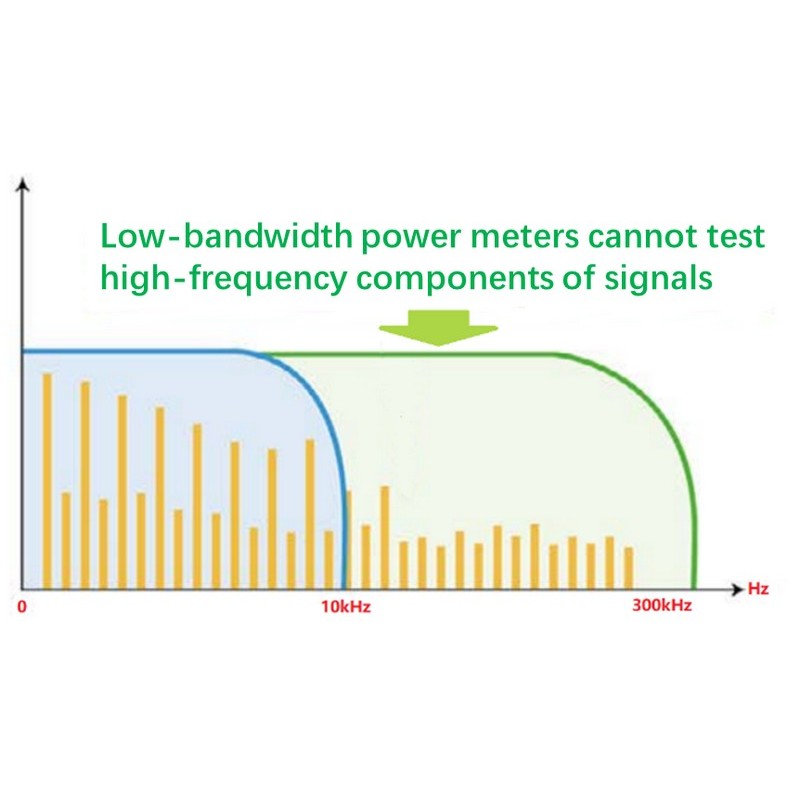
DC to 300 kHz Wide-Bandwidth Measurement
The wide DC–300 kHz bandwidth keeps switching content and harmonics in the per-phase power calculation, so three-phase inverter and drive measurements reflect the real waveform rather than the fundamental alone.
DC to 300 kHz wide-bandwidth measurement
Per-Channel Harmonic Analysis
Harmonic analysis to the 50th order runs on each channel independently, quantifying per-phase distortion on three-phase rectifier and drive front ends.
 Harmonic analysis to the 50th order, per channel

Per-Channel Energy Integration
Watt-hour and amp-hour integration accumulate per channel for three-phase efficiency runs and long-duration multi-rail energy profiling.
Energy integration (Wh / Ah) per channel
Simultaneous Waveform Display
The 5-inch display shows all channel waveforms together, confirming phase rotation and wiring before the measurement is trusted.
 Simultaneous waveform display across channels

D/A Output
A D/A analog output drives a chart recorder or DAQ for long-term trend logging of any measured channel.
D/A analog output for external recording
GPIB in Place of RS-232 — UTE323G
The UTE323G substitutes a GPIB (IEEE-488) port for RS-232 — it does not add GPIB alongside it. USB and LAN are present on both models, so if you automate over LAN the base UTE323 already covers you; the UTE323G is for racks built on a GPIB instrument bus.
Applications
Three-Phase Inverter & Motor-Drive Efficiency
Measure three-phase output power and per-phase imbalance on inverter and motor-drive designs in a single instrument, with synchronous sampling that holds phase relationships true.
Multi-Rail & Multi-Converter Test
Three independent channels measure three DC/AC rails or three converters at once — one instrument instead of three single-channel meters on a multi-output power-electronics bench.
Production & QA Test Bench
Per-channel limits, energy integration and a single RS-232/GPIB or LAN connection make the UTE323 a compact end-of-line and QA power-test station for small test labs and consultancies.
Accessories and Family Options
UTE-series test cables support safe three-phase connection. Pair the UTE323 with UNI-T programmable sources and electronic loads for a complete three-phase power-characterization bench.
Frequently Asked Questions
Can the UTE323 measure a full three-phase system at once?
Yes. Three synchronized channels and the 3P3W / 3P4W / 3V3A wiring modes measure a complete three-phase system in one instrument.
Can the three channels measure independent rails instead of one three-phase system?
Yes. The three channels can measure three independent DC/AC rails or converters simultaneously.
Does the UTE323G add GPIB on top of RS-232?
No — it substitutes GPIB for RS-232. USB and LAN are on both models; the UTE323G is for GPIB-bus racks.
Does each channel measure harmonics?
Yes — per-channel harmonic analysis to the 50th order.
Warranty
This instrument is backed by UNI-T's 3+2 Year Warranty — 3 years of standard coverage, plus 2 additional years free when you register your product. That's 5 years of total protection at no extra cost.
The warranty covers manufacturing defects and component failures under normal use conditions. UNI-T instruments are built for professional daily use, and our warranty reflects that commitment to long-term reliability.
| AC Power | 7.5W - 12000W | ||||||||||||||||||
|---|---|---|---|---|---|---|---|---|---|---|---|---|---|---|---|---|---|---|---|
| AC Current | 2.5mA - 20A | ||||||||||||||||||
| AC Voltage | 75mV - 600V | ||||||||||||||||||
| Measuring Bandwidth | DC, 0.1Hz - 300kHz · 9 values
|
||||||||||||||||||
| Instrument Type | Digital Power Meter |
Features
Full specifications (21)
| Details | |||||||||||||||
|---|---|---|---|---|---|---|---|---|---|---|---|---|---|---|---|
| Measured Parameters | DC|TRMS|Vmean | ||||||||||||||
| Wiring Modes | 1P2W|1P3W|3P3W|3P4W|3V3A | ||||||||||||||
| Power Factor | -1 - 1 | ||||||||||||||
| Voltage Resolution | 0.001 V, 0.01 V | ||||||||||||||
| Current Resolution | 0.01 mA, 0.1 mA, 1 mA | ||||||||||||||
| Voltage Accuracy |
|
||||||||||||||
| Current Accuracy |
|
||||||||||||||
| Power Accuracy |
|
||||||||||||||
| Harmonic Measurement | Maximum 50th order | ||||||||||||||
| Measurement Modes | DC|RMS|VMean | ||||||||||||||
| Data Refresh Rate | 0.1s|0.25s|0.5s|1s|2s|5s|10s|20s|Auto | ||||||||||||||
| Sample Rate | 300 kS/s | ||||||||||||||
| Features | |||||||||||||||
| Voltage range | 15 V, 30 V, 60 V, 150 V, 300 V, 600 V (CF=3) | ||||||||||||||
| Current range | 500 mA, 1 A, 2 A, 5 A, 10 A, 20 A (CF=3) | ||||||||||||||
| General Information | |||||||||||||||
| Display Size | 5in | ||||||||||||||
| Display Type | TFT LCD | ||||||||||||||
| Interface | LAN, USB, RS-232 (Option: GPIB, only for UTE323G and UTE333G) | ||||||||||||||
| Dimensions (W×H×D) | 225 × 158 × 400 mm | ||||||||||||||
| Weight | 14 kg | ||||||||||||||
| Warranty | 3+2 years | ||||||||||||||
| Certifications | CE | ||||||||||||||
Data Sheets and Manuals
Authentic UNI-T accessories are an affordable way to extend the functionality of your instrument.