
Professional Thermal Imagers
-
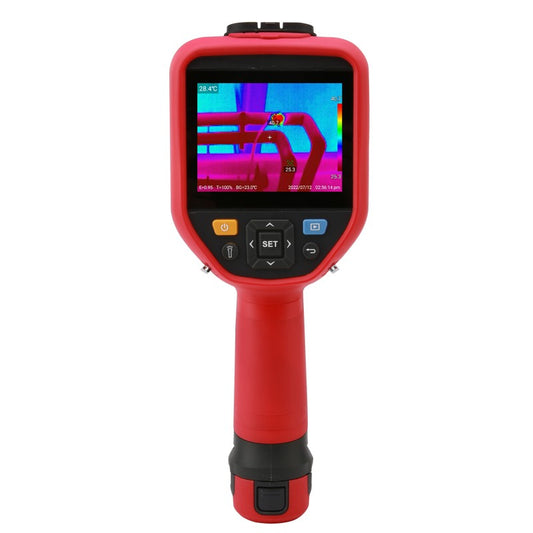
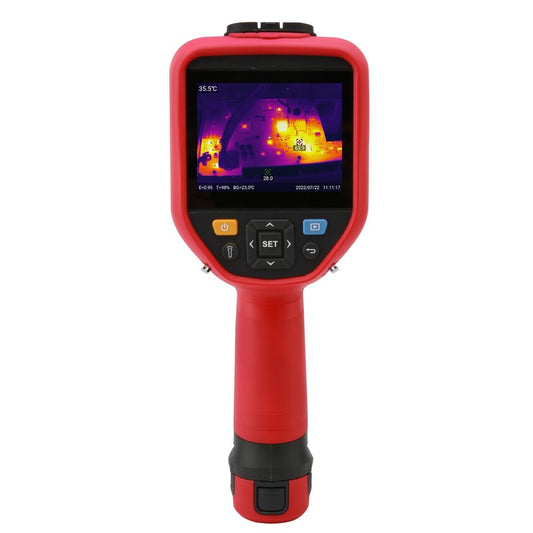
UTi256G256 G-Series Professional Thermal Imager
- IR Resolution: 256×192
- Max Temperature: 550°C (1022°F)
- Min Temperature: -20°C (-4°F)
- NETD: ≤40mK
- Field of View: 28° × 20°
- Display Size: 3.5in
Regular price $2,899.0020 in stock -
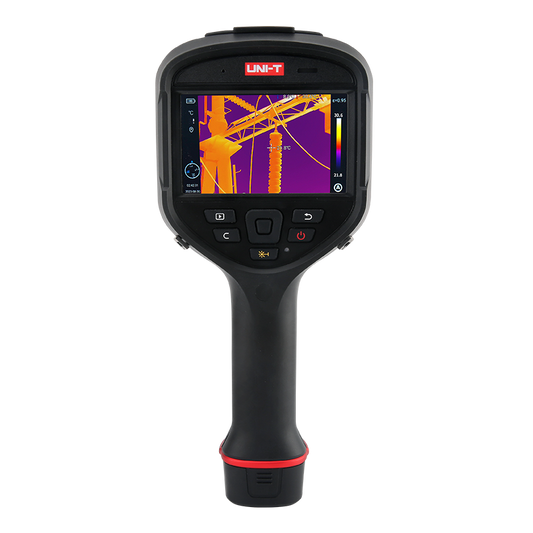
UTi384G384 G-Series Professional Thermal Imager
- IR Resolution: 384×288
- Max Temperature: 550°C (1022°F)
- Min Temperature: -20°C (-4°F)
- NETD: ≤40mK
- Field of View: 42° × 30°
- Display Size: 3.5in
Regular price $2,999.0017 in stock -
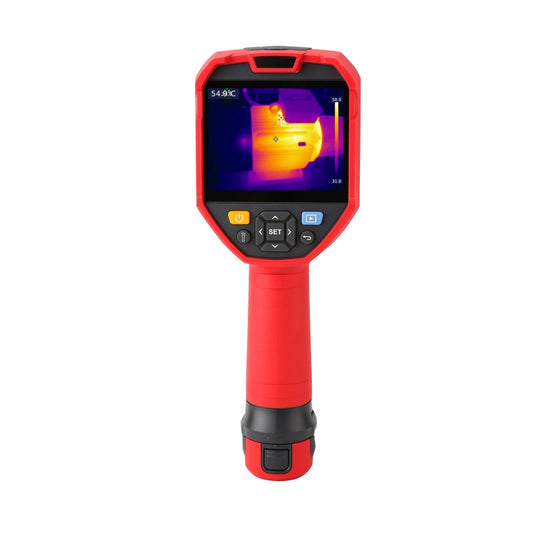
UTi384J384 Enhanced Series Thermal Imager
- IR Resolution: 384×288
- Max Temperature: 650°C (1202°F)
- Min Temperature: -40°C (-40°F)
- NETD: ≤40mK
- Field of View: 25° × 19°
- Display Size: 4.3in
Regular price $6,999.0010 in stock -
UTi640J640 Enhanced Series Thermal Imager
- IR Resolution: 640×480
- Max Temperature: 650°C (1202°F)
- Min Temperature: -40°C (-40°F)
- NETD: ≤40mK
- Field of View: 25° × 19°
- Display Size: 4.3in
Regular price $9,999.00Only 4 in stock -
UTi730E320 Enhanced Series Thermal Imager
- IR Resolution: 320×240
- Max Temperature: 400°C (752°F)
- Min Temperature: -40°C (-40°F)
- NETD: ≤65mK
- Field of View: 56° × 42°
- Display Size: 3.5in
Regular price $799.0025 in stock -
UTi730V320 Enhanced Series Video Thermal Imager
- IR Resolution: 320×240
- Max Temperature: 400°C (752°F)
- Min Temperature: -40°C (-40°F)
- NETD: ≤65mK
- Field of View: 56° × 42°
- Display Size: 3.5in
Regular price $1,299.0018 in stock -
UTi740H384 H-Series Professional Thermal Imager
- IR Resolution: 384×288
- Max Temperature: 650°C (1202°F)
- Min Temperature: -30°C (-22°F)
- NETD: ≤60mK
- Field of View: 28° × 21°
- Display Size: 4.3in
Regular price $2,099.0028 in stock -
Contact Us For Lead Time
UTi740H+400 Professional Enhanced Thermal Imager
- IR Resolution: 400×300
- Max Temperature: 650°C (1202°F)
- Min Temperature: -20°C (-4°F)
- NETD: ≤35mK
- Field of View: 29° × 21.5°
- Display Size: 4.3in
Regular price $1,899.00 -
New
UTi740X400 Inspector Series Thermal Imager
- IR Resolution: 400×300
- Max Temperature: 1200°C (2192°F)
- Min Temperature: -20°C (-4°F)
- NETD: ≤35mK
- Field of View: 27.7° × 20.6°
- Display Size: 5in
Regular price $3,999.00Only 5 in stock -
Contact Us For Lead Time
UTi740XH400 Inspector Series High Temperature Thermal Imager
- IR Resolution: 400×300
- Max Temperature: 2200°C (3992°F)
- Min Temperature: 1000°C (1832°F)
- NETD: ≤35mK
- Field of View: 14.6° × 10.9°
- Display Size: 5in
Regular price $4,999.00 -
Contact Us For Lead Time
UTi760H640 Professional Enhanced Thermal Imager
- IR Resolution: 640×480
- Max Temperature: 650°C (1202°F)
- Min Temperature: -20°C (-4°F)
- NETD: ≤35mK
- Field of View: 24° × 19.3°
- Display Size: 4.3in
Regular price $2,999.00 -
New
UTi760X640 Inspector Series Thermal Imager
- IR Resolution: 640×512
- Max Temperature: 1200°C (2192°F)
- Min Temperature: -20°C (-4°F)
- NETD: ≤35mK
- Field of View: 24° × 19.3°
- Display Size: 5in
Regular price $6,599.0013 in stock -
Contact Us For Lead Time
UTi760XH640 Inspector Series High Temperature Thermal Imager
- IR Resolution: 640×512
- Max Temperature: 2200°C (3992°F)
- Min Temperature: 1000°C (1832°F)
- NETD: ≤35mK
- Field of View: 24° × 19.3°
- Display Size: 5in
Regular price $7,999.00
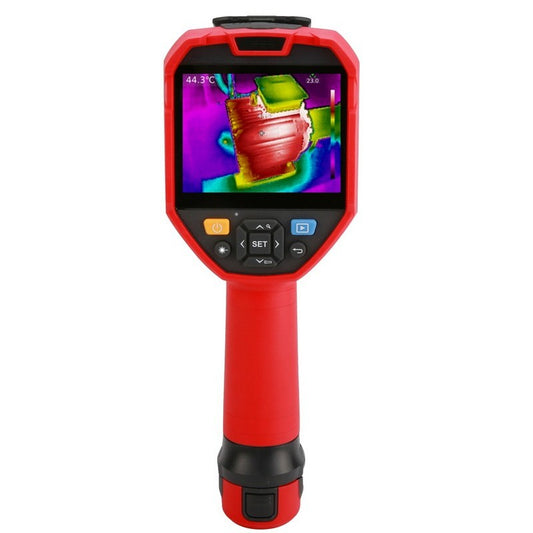
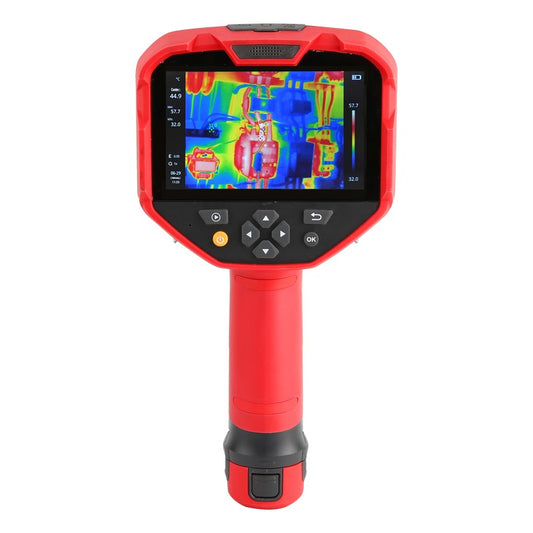


UNI-T Professional Thermal Imager — Buyer's Guide
Which Thermal Imager Is Right for You?
UNI-T's professional thermal imager catalog spans 13 models from 256×192 entry-level to 640×512 flagship resolution, with max-temperature classes from 400 °C up to 2200 °C. The choice comes down to IR resolution (how much detail you resolve and from how far away), maximum temperature (whether you can image hot industrial processes safely), and focus system (focus-free for quick inspection, autofocus for precision work).
What Every UTi Imager Shares
Analytical tooling, file formats, and mobile-app integration are consistent across the catalog. You're choosing for resolution, temperature reach, and focus mechanism.
Decision 1: Choose Your IR Resolution
IR resolution determines image detail and the distance at which you can resolve a feature accurately. A higher-resolution sensor gives you more pixels on a target at any working distance — meaning sharper imagery, smaller minimum measurement spot size, and more accurate readings on small or distant objects.
256×192
320×240
384×288 / 400×300
Decision 2: Maximum Temperature Class
Most industrial thermal inspection happens below 400 °C — motors, bearings, electrical connections, building envelopes, plumbing. But hot processes — steel, glass, ceramics, foundry, kiln work — demand higher-range sensors with reduced sensitivity at the low end. Pick the lowest class that covers your hottest expected target with reasonable headroom.
| Max Temperature | Models | Best for |
|---|---|---|
| 400 °C (752 °F) | UTi730E, UTi730V | Building envelope, HVAC, electrical, general PdM |
| 550 °C (1022 °F) | UTi256G, UTi384G | Industrial PdM, mechanical inspection |
| 650 °C (1202 °F) | UTi384J, UTi640J, UTi740H, UTi740H+, UTi760H | Heavy industrial, light high-temp process |
| 1200 °C (2192 °F) | UTi740X, UTi760X | Foundry, forging, light ceramics, kilns |
| 2200 °C (3992 °F) | UTi740XH, UTi760XH | Steel and glass production, advanced ceramics, plasma processes |
Decision 3: Focus System
Focus mechanism is where the ergonomics and the precision tradeoff meet. Pick by how you actually work in the field — fast and broad, or careful and detailed.
Focus-Free / Manual Focus
Models: UTi256G, UTi384G, UTi730E, UTi730V, UTi740H, UTi740H+, UTi760H.
Focus-free is "point and shoot" for most working distances; manual focus is a focus ring or button for precision. Best for quick sweeps through electrical panels or HVAC runs where you're triaging dozens of targets per session.
Autofocus (Touch AF, Continuous AF, Laser-Assisted)
Models: UTi384J, UTi640J, UTi740X, UTi740XH, UTi760X, UTi760XH.
Touch-to-focus on a specific target. Continuous AF maintains focus as you move. Laser-assisted AF uses the integrated laser to set focus at the target plane. Right pick for precision work — bearing analysis, R&D characterization, slow methodical inspection where image sharpness is the deliverable.
Complete Model Comparison
| Model | IR Resolution | NETD | Max Temp | Focus |
|---|---|---|---|---|
| UTi256G | 256×192 | ≤40 mK | 550 °C | Manual |
| UTi730E | 320×240 | ≤65 mK | 400 °C | Focus-free |
| UTi730V | 320×240 | ≤65 mK | 400 °C | Focus-free + laser |
| UTi384G | 384×288 | ≤40 mK | 550 °C | Manual |
| UTi384J | 384×288 | ≤40 mK | 650 °C | Manual / Auto / Touch AF / Continuous AF |
| UTi740H | 384×288 | ≤60 mK | 650 °C | Manual |
| UTi740H+ | 400×300 | ≤35 mK | 650 °C | Manual |
| UTi740X | 400×300 | ≤35 mK | 1200 °C | Touch AF / Continuous AF / Contrast AF / Laser AF / Manual |
| UTi740XH | 400×300 | ≤35 mK | 2200 °C | Touch AF / Continuous AF / Contrast AF / Laser AF / Manual |
| UTi640J | 640×480 | ≤40 mK | 650 °C | Manual / Auto / Touch AF / Continuous AF |
| UTi760H | 640×480 | ≤35 mK | 650 °C | Manual |
| UTi760X | 640×512 | ≤35 mK | 1200 °C | Continuous AF / Semi-auto / Laser-assisted / Touch AF / Manual |
| UTi760XH | 640×512 | ≤35 mK | 2200 °C | Continuous AF / Semi-auto / Laser-assisted / Touch AF / Manual |
Recommended Configurations
Building diagnostics & HVAC service
Pick: UTi256G or UTi730E — 256×192 or 320×240 covers building envelope, insulation defects, and HVAC duct work at typical working distances. 400–550 °C max temperature is sufficient for residential and light commercial.
Electrical inspection & predictive maintenance
Pick: UTi384G or UTi740H — 384×288 resolution resolves small connections, breakers, and motor bearings. 550–650 °C max covers the worst hot-spot you'll find on functioning equipment.
Industrial PdM with precision focus
Pick: UTi384J or UTi740H+ — autofocus on the 384J or improved NETD (≤35 mK) on the 740H+ gives you sharper imagery and better sensitivity for bearing race analysis, electronics-level inspection, and detailed component work.
Foundry, kiln, glass production
Pick: UTi740X or UTi760X — 1200 °C range covers most hot industrial process work. Pick 740X for portability, 760X when 640×512 resolution is needed for long-range or fine-detail process imaging.
Steel mill, advanced ceramics, plasma
Pick: UTi740XH or UTi760XH — 2200 °C range is purpose-built for steel, primary glass, and ultra-high-temp ceramics work. 760XH for the highest pixel count when imaging from a safe standoff distance.
R&D thermal characterization
Pick: UTi640J or UTi760H — 640×480 with ≤35–40 mK NETD captures fine thermal gradients on PCBs, prototypes, and component-level R&D where every pixel of detail matters.
Long-range or expert-level inspection
Pick: UTi760X — 640×512 with continuous autofocus and laser-assisted focus for the most demanding combinations of resolution, distance, and image quality.
Why Choose UNI-T Thermal Imagers?
Resolution tiers that match real work
Four pixel-count classes from 256×192 to 640×512 with intermediate 320, 384, and 400-wide options. Pick the resolution your work actually needs without overbuying or being trapped at one tier.
Temperature ranges that scale with the industry
Five max-temperature classes from 400 °C through 2200 °C. Building inspectors, foundry engineers, and steel mill thermographers all find the right tool in the catalog without changing instrument brands.
Modern focus systems where they matter
Focus-free for fast triage. Manual focus for precision. Touch, continuous, and laser-assisted autofocus on the X-series for R&D and detailed PdM. Match the focus mechanism to the work cadence.
3+2 year warranty
Three-year base warranty, two additional years on registration. Parts, labor, return shipping included.
FAQ
What's NETD and why does the spec sheet keep mentioning it?
NETD (Noise-Equivalent Temperature Difference) is the smallest temperature change the sensor can detect above its noise floor. Lower is better. ≤40 mK means the sensor can distinguish a 0.04 °C change in a target. ≤35 mK is excellent — the difference becomes visible when you're trying to find subtle thermal anomalies on functioning electronics or thermally well-managed equipment.
Do I need 640×512 resolution if I'm just doing electrical inspection?
Almost never. 256×192 or 320×240 is more than enough for the working distances electrical inspectors actually work at. 640×512 earns its premium for long-range work, fine-detail R&D, and situations where you need extra pixels to resolve small features from a safe standoff.
What's the difference between the X-series and H-series at the same resolution?
X-series adds high max-temperature capability (1200 °C and up) and advanced autofocus (touch, continuous, laser-assisted). H-series keeps the 650 °C max-temp class with manual or no focus mechanism. Pick X when you need hot-process capability or sharp autofocus; H when neither applies and the lower price point is welcome.
Can I do radiometric video recording?
Yes — every model in the professional catalog records radiometric (per-pixel temperature) video as well as still images. Useful for analyzing thermal events over time, training-data capture, and detailed report generation back at the desk.What's a "J" model vs a "G" model in the UTi range?
"J" models add autofocus (touch and continuous) plus enhanced features for precision work. "G" models keep manual focus and the core feature set at a lower price point. Same sensor in most cases; the difference is ergonomic and focus-system.
Resolution for detail, temperature class for the process, focus for the cadence.

